Blog
Search an Article
FPV Drone Laws & Registration USA (2025): TRUST, Remote ID, FAA Rules | HobbyKing
H-KING Turbo BushMaster V2 1830mm: 10 Things to Know Before You Buy
Battery
How Many Cycles Do LiPo Batteries Last? IR Warning Signs + Replace Checklist
Battery
How Many Cycles Do LiPo Batteries Last? IR Warning Signs + Replace Checklist
How Long Do LiPo Batteries Last?
The annoying truth: a LiPo can still “charge” long after it stops being a good pack. If your quad suddenly feels soft on punch-outs, or your RC car loses snap halfway through a run, that’s usually the pack telling you it’s aging. Let’s put real baselines around it—by use case—and make the “replace or keep?” call less of a guessing game.
In this guide
- What “last” actually means (cycle life vs calendar life)
- Cycle count: why “one cycle” isn’t what you think
- Don’t confuse lifespan with flight time (minutes)
- Baselines by scenario: RC car vs boat vs plane vs drone/UAV
- Quick baseline by use intensity (light vs weekly vs heavy)
- The 4 pack-killers (and what real users do instead)
- IR check: a quick number DIY pilots actually use
- How long can a LiPo last when not in use?
- When to replace: the “don’t argue with it” checklist
- How to stretch life without babying the pack
- FAQ
- Sources
• For fixed-wing battery picking (S count, CG, and real-world picks): Best Battery for an RC Plane
1) What “last” actually means
Two clocks run at the same time: cycle life (how many charge/discharge cycles before it feels weak) and calendar life (how much it ages just sitting there).
That’s why one pack can feel tired after a season of hard use, while another “garage pack” can age quietly because it sat fully charged in a warm place. If you’ve ever pulled out a “barely used” battery that suddenly balances forever… yep, that’s calendar aging doing its thing.
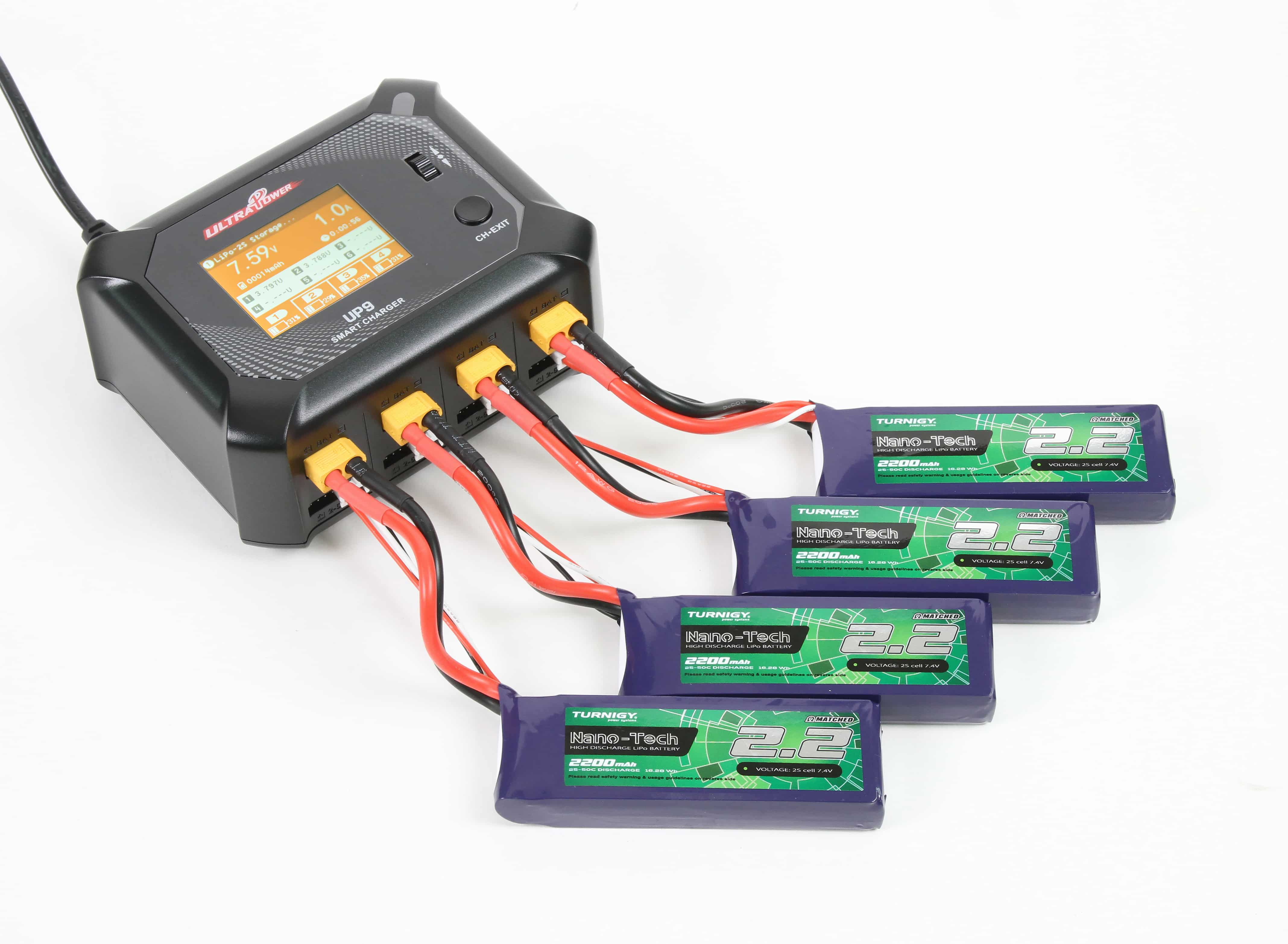
2) Cycle count: why “one cycle” isn’t what you think
In normal hobby use, a LiPo often lands somewhere around 300 to 800 charge cycles. The reason the range is so wide is simple: how deep you discharge the pack (plus heat and storage habits) changes how expensive each “cycle” really is.
Real-world translation: landing a little earlier is often the cheapest “battery upgrade” you’ll ever buy.
3) Don’t confuse lifespan with flight time (minutes)
This article is about lifespan—how many months/years and how many cycles you get before a pack stops being trustworthy. If what you really want is “How many minutes will this pack fly my drone?” (and how to improve it), that’s a different question with a different answer.
4) Baselines by scenario: RC car vs boat vs plane vs drone/UAV
Most lifespan articles feel vague because they don’t separate the use cases. A “3S 5000mAh” pack in a trainer plane lives a very different life than a hard-geared RC car on high-grip tires. Same chemistry, different stress.
RC Cars high current heat bursty
Baseline: Many hobby discussions put LiPo life somewhere around the 300–500 recharge-cycle neighborhood for demanding use, with the usual caveat: how deep you discharge and how hot you run the pack changes everything.[5]
Real-life tell: the pack feels strong for 20–30 seconds, then “falls off a cliff” under throttle. That’s usually IR climbing.
RC Boats steady load long WOT cooling varies
What decides lifespan: cooling. A hull that traps heat will age packs fast. If your packs come out hot after a normal run, don’t chase cycle-count numbers—fix heat first.
Easy “boat check”: after a normal run, if the pack is too hot to comfortably hold, you’re living on the short-lifespan side of the map.
RC Planes cooler average partial throttle gentler bursts
Typical feel: planes often see lower average current (unless EDF/3D), so packs can stay in a happier zone longer. The first symptom is often balancing getting slower or one cell drifting.
Real plane habit: watch your charger’s balance phase. If it used to finish fast and now crawls every time, that pack is aging even if it still “flies fine.”
FPV Drones / UAV sag-sensitive warm packs punch-outs
What you notice first: punch-outs get soft and voltage drops fast under load. FPV is basically a sag detector with props attached.
On the calendar side, a commonly cited real-world view is that noticeable performance drop can show up around the 12–18 month mark for many users— but properly stored packs can remain usable longer.[3]
5) Quick baseline by use intensity (light vs weekly vs heavy)
Here’s the “am I normal?” table people actually want. It’s not a promise—it’s a reality check. If your packs die way faster than the band you think you’re in, the culprit is almost always heat, deep discharge, or storage habits.
| How you use packs | What “healthy aging” looks like | Early warning signs to watch |
|---|---|---|
| Light use Occasional weekends, mostly gentle throttle, stored correctly |
Often stays “nice” for a long time; performance drops gradually, not suddenly | Balance takes longer over time; one cell starts drifting first |
| Weekly use 1–3 sessions/week, normal loads, a mix of cruising + bursts |
You’ll usually feel sag creeping in before anything looks wrong | Punch-outs trigger low-voltage earlier; packs come down warmer than they used to |
| Heavy use High current, frequent WOT, hot climate, “use it to the bottom” habits |
Expect “good life” to compress; packs can feel old fast if heat isn’t under control | Hot packs after normal runs; balance phase crawls; occasional puffing starts appearing |
6) The 4 pack-killers (and what real users do instead)
This is the “experience” part. Packs usually don’t fail because someone forgot a chemistry fact. They fail because the same habits repeat every weekend.
| The “normal” habit | What it does to the pack | What real users do |
|---|---|---|
| Running it until it feels weak | Deep discharge → higher stress per cycle, more heat, faster IR rise | Stop while it still feels crisp (leave a buffer) |
| Leaving packs fully charged for days | High voltage + time ages it on the shelf | Use Storage mode if you’re not using it soon[1] |
| Charging when the pack is still hot | Heat + charge stress = rough combo for longevity | Let it cool to near room temp first |
| Ignoring balance drift | One weak cell gets punished and the pack “ages early” | Balance charge; watch cell delta, not just total voltage |
7) IR check: a quick number DIY pilots actually use
If you’re a DIY type, internal resistance (IR) is one of the cleanest “is this pack getting tired?” signals—because it tracks why sag gets worse. Different packs and sizes vary a lot, so don’t treat one number like a law. Use it as a trend (and compare the same pack over time).
Quick pro tip: IR readings can vary with temperature and how your charger measures it. Always compare “like with like” (same charger, similar pack temperature) and look at the trend, not a single reading.
8) How long can a LiPo last when not in use?
If stored correctly, a LiPo can sit for a long time and still be usable. Stored poorly, it can “age fast” without ever flying a minute.
• Many users notice a real drop after 12–18 months (especially with sloppy storage).[3]
• A stored pack at roughly storage voltage can sit for many months (or longer) and still be fine—just don’t wake it up aggressively.[6]
Battery University’s storage guidance leans heavily on keeping batteries in a cool place and avoiding stressful storage conditions.[2]
Coming back after a long break? Balance charge first, keep an eye on cell delta, and treat the first flight/run as a check ride. If it sags hard or heats up abnormally, don’t force it back into “hard-use” duty.
9) When to replace: the “don’t argue with it” checklist
Replace when the pack stops passing basic trust tests:
- Usable runtime down ~30%+ on the same setup (same props/gearing, similar conditions)
- Voltage sag becomes the main feature (strong for a moment, then mushy)
- Heat climbs in situations that used to be normal
- Balance takes forever / one cell keeps drifting
- Puffing/swelling (don’t negotiate with a puffy pack)
10) How to stretch life without babying the pack
You can still fly hard and keep nice packs—just don’t do “full storage + deep discharge + hot charging” as a lifestyle. A simple pack-note habit helps a lot: saggy / runs hot / balance slow. You’ll spot aging earlier.
- Land earlier when you care about longevity (especially on hot days)
- Storage-charge if the next session isn’t soon
- Cool first, then charge
- Keep airflow in mind (boats/hulls and tight drone stacks trap heat)
FAQ
In reasonable use, many packs land somewhere around 300–800 cycles. Deep discharges and heat push you toward the lower end; landing with a buffer and good storage habits can stretch life upward. The most useful mindset is “make each cycle cheaper”: avoid running packs hot, don’t drain to the bottom, and don’t store them fully charged for days.
Stored at a reasonable “storage” level in a cool place, a LiPo can remain usable for years. The shelf-life killers are leaving it fully charged for long periods and storing it hot. After long storage, balance charge first and ease back into load before you go full-send.[2][6]
Not quite. This article is about lifespan (months/years and when to replace). If you want flight time in minutes and how to improve it, use our drone flight-time guide: How Long Does a Battery Last on a Drone?
Most people feel it first as extra sag (voltage drops sooner under load) or a longer balance phase on the charger. Heat creeping up in “normal” use is another early warning.
Sources
- [1] Battery University — BU-808: How to Prolong Lithium-based Batteries
- [2] Battery University — BU-702: How to Store Batteries
- [3] The Drone Girl — How long do LiPo batteries last?
- [5] Drones StackExchange — LiPo lifespan and replacement discussion (community baseline)
- [6] RC Groups — Storage discussion (storage voltage, months-long storage, warm-up cautions)
Note: Baselines are reality checks, not guarantees—your load, heat, discharge depth, and storage habits will move the result.
Category
Category
Shop Our Best Sellers

Avios (PNF) Grand Tundra 2 STOL Sports Plane EPO 1700mm (Green/Silver)
SKU 9499670637
$331.99$369.00
H-King Paramotor V2 w/LED Light Bar 2400mm (PNF)
SKU 9310670504
$159.99$189.99
H-King (PNF) Flybeam 2 Night Flyer w/LED Light System 1092mm (EPO)
SKU 9310670554
$152.99$179.99
H-King (PNF) KitFox Sport Plane 1100mm/1250mm (EPO)
SKU 9898670063
$185.99$199.99
Avios Extra NG (PNF) Semi-Scale 3D Aerobatic Airplane EPO 1600mm
SKU 9447670080
$539.99$569.00
HobbyKing Sports Hawk 'ARF-Plus' 105mm EDF Jet w/Retracts, Servos & LED Lights
SKU 9306670706
$1,138.99$1,199.00
H-King Walrus (PNF) Glider w/Flaps EPO 1400mm
SKU 9306000019
$83.99$98.99
Durafly (PNF) Rare Bear Reno Racer 680mm EPO (Gold/White)
SKU 1021670038
$143.99$169.99
Durafly (PNF) Rare Bear Reno Racer 680mm EPO (Green/White)
SKU 1021670037
$143.99$169.99
Turnigy APEX 2200mAh 3S 11.1V 180C LiPo Battery with XT60 for 7 inch FPV Drone and Planes
SKU 9067110092
$20.20$25.99
Turnigy 3300mAh 3S (11.1V) 30C Shorty LiPo Battery Pack w/XT60
SKU 9067110010
$18.99$22.99
Turnigy 20000mAh 6S 22.2V 40C LiPo Battery w/XT90-High Endurance LiPo for RC Cars Plane Boats & Drones
SKU 9067110110
$194.99$216.99
ZD Racing RX-12 1/12 Scale RC Rally 4WD Brushless ARR , Red
SKU 1032240039
$126.99$149.99