Blog
Search an Article
General News
Analysis of LiPo Battery Self-Discharge Rate and Storage Voltage: HobbyKing Teaches You Long-Term Storage Tips
General News
Analysis of LiPo Battery Self-Discharge Rate and Storage Voltage: HobbyKing Teaches You Long-Term Storage Tips
In RC, FPV, and drone builds, LiPo packs get talked about like they’re “all punch and no patience” — C rating, sag, IR, the fun stuff. But the slow, boring number that quietly ruins packs is often the LiPo battery self-discharge rate. If you store a pack the wrong way (or ignore a drifting cell), you can come back weeks later to a pack that’s already in the danger zone — even though it was never “used.”
This guide is the practical version: what self-discharge really looks like, how storage voltage changes the outcome, and how to tell true self-discharge from things that feel similar (like parasitic drain in a model). More importantly, it shows you how to judge what you’re seeing on the bench: what kind of drift is normal, what counts as a warning sign, when a pack can stay in service, and when it’s time to downgrade or retire it.

1) What is LiPo self-discharge (in plain terms)?
Self-discharge is the slow loss of stored energy caused by internal chemistry — it happens even when the pack isn’t connected to anything. It’s not “mystery usage,” it’s the pack aging in place. Healthy packs lose a little over time; unhealthy packs lose more, and often lose it unevenly across cells. When self-discharge gets severe in a weak or damaged cell, you’ll often see other decline signals alongside it too — including rising internal resistance (IR), earlier voltage sag, and more heat under load.
HobbyKing LiPo lines like Turnigy and Nano-Tech are built with better cells and tighter QC, which usually means more stable storage behavior — but even the best pack can be damaged by storage habits.
1.1 What’s a “normal” self-discharge rate?
It varies with cell quality, age, and storage conditions. A small monthly drop can be normal — but the bigger “tell” is stability + balance:
- Healthy storage behavior: all cells stay close together (small spread), voltage drifts slowly.
- Warning behavior: one cell drifts lower (or higher) than the rest, spread grows over time.
Not a lab spec — a bench rule: if a pack stored correctly keeps developing a bigger cell spread month after month, treat it as a “watch list” pack even if total voltage looks fine.
1.2 Why self-discharge matters more than people think
Because the risk isn’t just “less flight time later.” A pack that self-discharges unevenly can silently push one cell into undervoltage while the pack still looks “okay” as a whole. That’s how people end up with:
- packs that refuse to balance cleanly
- one cell that always hits LVC first
- unexpected puffing after a charge session
- “it was fine last month” failures
1.3 What normal drift looks like vs. what should worry you
Here’s the practical part most people actually need: normal storage drift is usually slow and fairly even. In other words, the whole pack may come back a little lower after sitting, but the cells still stay close together.
What gets people into trouble is not a pack that loses a little voltage over time — it’s a pack where one cell keeps separating from the others. That’s the pattern to watch.
| What you see after storage | What it usually means | What to do next |
|---|---|---|
| ✅ All cells are still close together, pack only needs a small top-up back to storage | Usually normal aging/storage behavior | Keep using normally and recheck next month |
| ⚠️ One cell is slightly lower than the rest, but balances back normally | Early watch-list behavior | Mark the pack and recheck after the next storage cycle |
| ⚠️ The same cell keeps drifting lower every time the pack sits | Aging or damaged cell; no longer a “normal drift” pattern | Downgrade to light-duty use or retire, depending on how fast the drift is growing |
| ❌ Cell spread is growing, balancing takes longer, pack comes back unstable again after storage | Strong warning sign | Stop trusting it for high-load flying/driving; retire if the pattern repeats |
The key idea is simple: a little overall drop is one thing; repeated uneven drift is another. Total pack voltage can still look “okay” while one cell is quietly turning into a problem.
2) Storage voltage vs. self-discharge (this is where packs live or die)
Storage voltage is the safest resting point for a LiPo you won’t use soon. For most standard LiPo, that’s typically around 3.7V–3.85V per cell. It’s the balance between two bad extremes:
- Too high for too long (near full): accelerates aging and side reactions, often increases drift.
- Too low for too long: risks irreversible undervoltage damage.
If you’re storing packs for more than a few days, “storage voltage” should be your default — especially if you have multiple packs and real life gets in the way. For a broader routine covering storage setup, safe handling, and discharge basics, see our LiPo Battery Safety, Storage, and Discharge Guide.
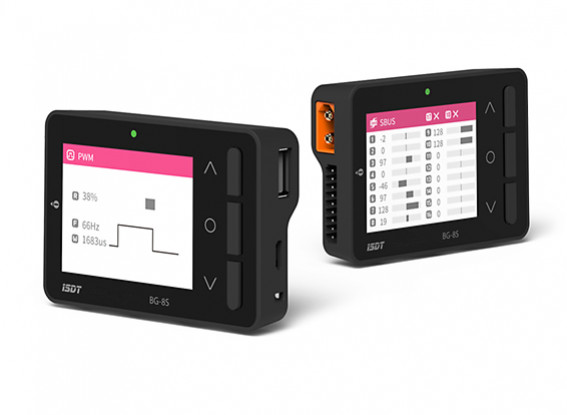
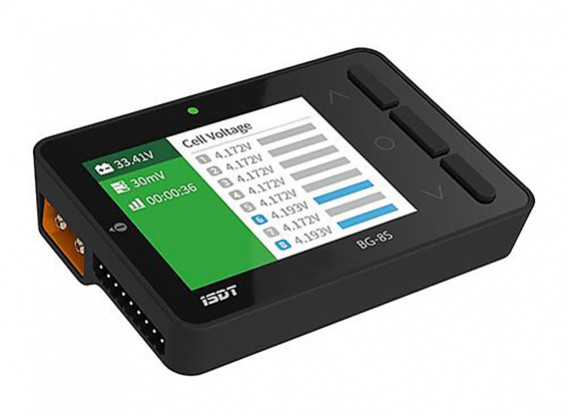
HobbyKing recommends using chargers with a dedicated Storage mode (for example, the Reaktor series). For quick pack checks and cell readouts, a checker like iSDT BG-8S is also a handy bench tool.
2.1 The 3-step storage routine that prevents most problems
| Step | What to do | Why it works |
|---|---|---|
| 1) Set storage voltage | Use Storage mode to land around ~3.7–3.85V/cell | Reduces chemical stress vs. full-charge storage |
| 2) Store cool & dry | 15–25°C, out of sun, stable temp, lower humidity | Heat speeds up aging and makes drift worse |
| 3) Recheck monthly | Check total + per-cell; top back to storage if needed | Catches “one bad cell” early before it becomes a dead pack |
If you’re the type who stores packs for seasons (winter breaks, rainy months, project pauses), this routine is basically free battery life.
3) The big confusion: self-discharge vs. parasitic drain
A lot of “my LiPo drains fast” reports aren’t self-discharge at all — they’re parasitic drain from the model: receivers, buzzers, GPS modules, LEDs, or a wiring leak drawing power while “off.”
3.1 The unplugged 12–24 hour test (fast diagnosis)
- Bring the pack to storage voltage.
- Disconnect it completely and leave it on the bench for 12–24 hours.
- Recheck per-cell voltage.
What it means:
- Holds unplugged but drops in-model: it’s parasitic drain (something is drawing power).
- Drops unplugged and cell spread grows: you may have a pack health issue (aging cell / damage).
3.2 Turn the 24-hour test into a real drift check
Don’t do the unplugged test just once and forget it. The real value is in the pattern.
- Balance the pack and bring it to storage voltage.
- Write down the per-cell voltages, not just total voltage.
- Leave it unplugged for 24 hours and check again.
- If one cell is lower, repeat the same check after the next storage cycle.
If the pack comes back with a tiny, even drift, that’s usually fine. If the same cell keeps ending up low after every rest period, stop calling it “probably okay” and start treating it like a declining pack.
4) Common storage mistakes (and the exact consequences)
| Mistake | What happens | Fix |
|---|---|---|
| Storing fully charged | Faster aging, higher drift, puff risk increases over time | If plans change, put packs back to Storage |
| Storing too low | Undervoltage damage; pack may become unsafe/unusable | Store ~3.7–3.85V/cell; check monthly |
| Hot storage (car/garage) | Self-discharge accelerates; drift grows; swelling risk rises | Cool, stable temps; avoid sun & heat cycling |
| No per-cell checks | One weak cell “silently” drops too low | Use a checker; watch cell spread |
5) When to keep using a pack, when to downgrade it, and when to retire it
This is the part most storage articles skip. Not every drifting pack needs to go straight in the bin — but not every pack deserves full trust either.
5.1 Still okay for normal use
- Cells stay close together after storage
- The pack only needs a small correction back to storage voltage
- No single cell repeatedly falls behind
- No unusual heat, swelling, or early LVC under normal load
That kind of pack is behaving like an aging-but-stable LiPo. Keep using it, but keep checking it. The goal isn’t perfection. The goal is stable behavior you can predict.
5.2 Downgrade to light-duty use
Downgrade the pack if the drift is real, but not yet severe. That means the pack may still work, but it no longer deserves high-risk jobs.
- One cell sometimes comes back lower after storage
- It still balance-charges, but not as cleanly as before
- You don’t see immediate danger signs, but you don’t fully trust it anymore
Light-duty use means bench testing, servo setup, radio work, gentle park flying, or other lower-load tasks — not long-range FPV, hard freestyle, high-current EDF, racing, or expensive models where an early voltage collapse would hurt you.
5.3 Time to retire it
- The same cell repeatedly drifts lower after every storage period
- Cell spread keeps getting bigger instead of stabilizing
- The charger takes noticeably longer to bring the pack back into balance
- The pack looks okay after charge, then drifts again quickly while sitting
- You also see swelling, abnormal heat, or early sag/LVC in actual use
At that point, you’re not looking at harmless self-discharge anymore. You’re looking at a pack that is gradually losing trustworthiness. For RC, that matters just as much as capacity.
A good rule of thumb is this: if you’re already changing your flying or driving plans around that pack because you don’t trust it, it’s probably already a downgrade pack. If you’re actively hoping it makes it through one more outing, it’s getting close to retirement.
6) Real-world warning patterns (what good and bad behavior looks like)
Case 1: The stored-all-year pack that still behaves normally
A FPV pilot stored a Turnigy Graphene 1500mAh 4S at ~3.8V/cell after an event, kept it in a dry toolbox, and checked it periodically. A year later, the pack still showed tight cell balance with only a small drop — the kind of storage stability you’re aiming for.
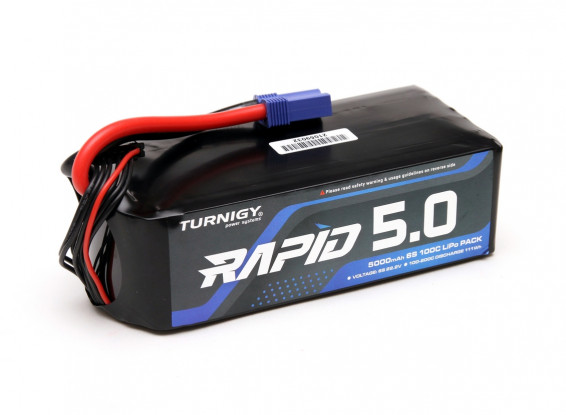
Case 2: The pack that looks okay in total voltage, but one cell keeps coming back low
This is one of the most common warning-sign patterns. The pack doesn’t look dead. Total voltage may still seem reasonable. But every time you check it after sitting, the same cell is the one that fell behind. That is not just random storage drift anymore. That is the pack telling you where the weakness is.
A pack like this may still balance back and may still run. That does not mean it belongs in your highest-load or highest-value setup. This is exactly the kind of pack that should move to light-duty use while you keep watching it closely.
Case 3: The pack that balances today and drifts again tomorrow
Another classic bad-sign pack is the one that seems to recover on the charger, but then quickly loses balance again after a short rest. That usually means the charger is correcting the symptom, but the cell itself is no longer holding in a stable way. Once that pattern repeats, retirement becomes the safer call.
7) Bottom line: brand helps, habits decide, but abnormal drift is the real clue
Higher-quality packs can hold storage voltage more consistently, but storage routine is what protects you long-term. If you do nothing else, do these two things: store at ~3.7–3.85V/cell and check per-cell monthly. That single habit prevents most “self-discharge killed my pack” endings.
But here’s the part worth remembering: not all voltage loss means the same thing. A little slow, even drift can be normal. The real bad sign is repeated uneven drift — especially one cell that keeps coming back lower after every storage period. That’s the moment to stop thinking only about storage habits and start thinking about pack trustworthiness.
And when you need replacements or backup packs you can actually trust, it makes sense to start with better-built options from proven lines like Turnigy and Nano-Tech, then pair them with a charger and checker that make monthly storage checks easy instead of something you keep putting off.
Retiring a pack? The next step is making it safe before disposal. See our guide: How to Safely Dispose of LiPo Batteries.
FAQ: LiPo self-discharge & storage voltage (real-world questions)
It depends on cell quality, age, and storage conditions. A small drop can be normal, but focus on stability + balance: a healthy pack stored at storage voltage shouldn’t show one cell drifting far from the rest. What matters more than one isolated reading is the pattern over time.
Usually not. That’s classic parasitic drain. Do an unplugged 12–24 hour test at storage voltage. If it holds unplugged but drops in-model, something is drawing power (buzzer, receiver, accessories, wiring leakage).
If it’s truly “tomorrow,” it’s not the end of the world — but don’t make full-charge storage your default. If plans change, move packs to storage voltage so you don’t accidentally leave them at 4.20V/cell for weeks.
Treat that as a real warning sign, not a harmless quirk. If the same cell repeatedly comes back lower after storage, the pack should no longer be trusted for high-load or high-value use. You may keep it only for light-duty bench or low-stress work if it still balance-charges cleanly and shows no heat or swelling. If the drift keeps getting worse, retire it.
It means the pack may still function, but it no longer deserves demanding jobs. Use it for bench testing, servo setup, radio work, or gentle flying/driving only. Don’t use it for hard freestyle, long-range FPV, EDF, racing, or expensive models where an early voltage collapse could cause a crash or bigger loss.
Uneven cell drift is usually the bigger red flag. A pack can lose a little voltage overall and still be fine. What should worry you more is one cell repeatedly falling behind the others after storage, especially if that same cell keeps doing it over multiple checks.
Category
Tags
Category
Tags
Shop Our Best Sellers
 10%
OFF

Avios (PNF) Grand Tundra 2 STOL Sports Plane EPO 1700mm (Green/Silver)
SKU 9499670637
$331.99$369.0016%
OFF
H-King Paramotor V2 w/LED Light Bar 2400mm (PNF)
SKU 9310670504
$159.99$189.9915%
OFF
H-King (PNF) Flybeam 2 Night Flyer w/LED Light System 1092mm (EPO)
SKU 9310670554
$152.99$179.99
H-King (PNF) KitFox Sport Plane 1100mm/1250mm (EPO)
SKU 9898670063
$185.99$199.997%
OFF
Avios Extra NG (PNF) Semi-Scale 3D Aerobatic Airplane EPO 1600mm
SKU 9447670080
$528.99$569.00
HobbyKing Sports Hawk 'ARF-Plus' 105mm EDF Jet w/Retracts, Servos & LED Lights
SKU 9306670706
$1,054.99$1,199.00
H-King Walrus (PNF) Glider w/Flaps EPO 1400mm
SKU 9306000019
$83.99$98.9915%
OFF
Durafly (PNF) Rare Bear Reno Racer 680mm EPO (Gold/White)
SKU 1021670038
$143.99$169.99
Durafly (PNF) Rare Bear Reno Racer 680mm EPO (Green/White)
SKU 1021670037
$143.99$169.99
Turnigy APEX 2200mAh 3S 11.1V 180C LiPo Battery with XT60 for 7 inch FPV Drone and Planes
SKU 9067110092
$20.20$25.99
Turnigy 3300mAh 3S (11.1V) 30C Shorty LiPo Battery Pack w/XT60
SKU 9067110010
$18.99$22.99
Turnigy 20000mAh 6S 22.2V 40C LiPo Battery w/XT90-High Endurance LiPo for RC Cars Plane Boats & Drones
SKU 9067110110
$194.99$216.99
ZD Racing RX-12 1/12 Scale RC Rally 4WD Brushless ARR , Red
SKU 1032240039
$126.99$149.99