ブログ
記事を検索する
Battery
LiPo Battery Troubleshooting Guide: Solving Drainage and Sudden Power Loss Issues | HobbyKing
Battery
LiPo Battery Troubleshooting Guide: Solving Drainage and Sudden Power Loss Issues | HobbyKing
Complete Guide to LiPo Battery Troubleshooting: Fixing Power Drain and Sudden Shutdown Issues | HobbyKing
LiPo batteries are used in everything from RC planes and FPV drones to RC cars, boats, and DIY electronics because they are light, powerful, and able to deliver high current quickly. But when a pack starts acting up, the symptoms can look frustratingly similar: runtime suddenly gets shorter, voltage seems to disappear too fast, the model shuts down as soon as you plug the pack in, or one cell keeps ending up lower than the others.
This guide focuses on the part that matters most when you are actually trying to solve the problem: why a LiPo battery drains fast, why it may die when plugged in, how to tell whether the problem is the battery or the device, and whether the pack is still usable. Instead of turning this into a general storage or safety article, we are keeping it centered on practical LiPo battery troubleshooting for power drain and sudden shutdown issues.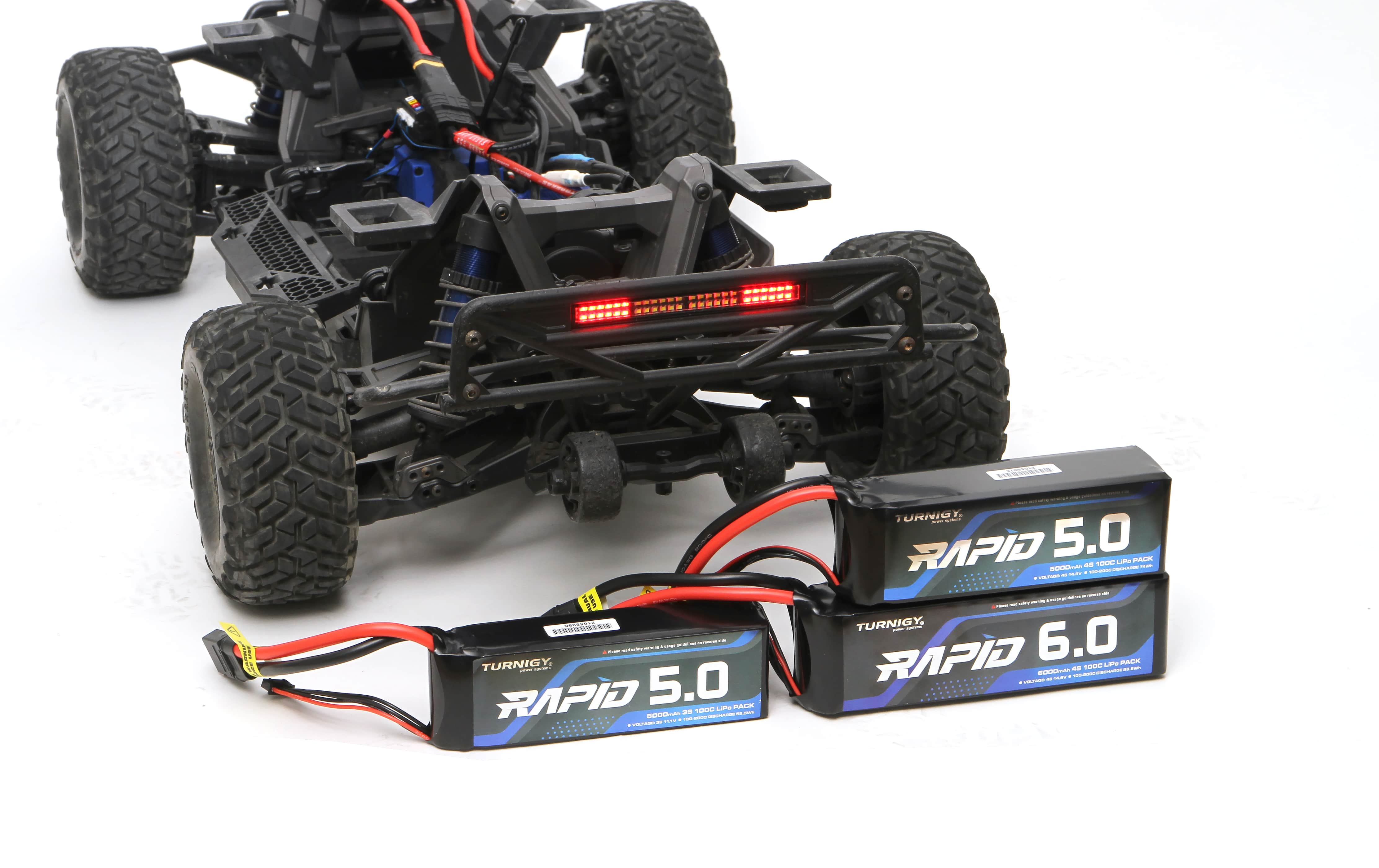
Start Here: What Kind of Problem Are You Actually Seeing?
Before blaming the pack, separate the symptom first. Most “bad battery” complaints fall into one of these four situations:
- The battery drains fast during use: runtime is much shorter than before, or low-voltage warning shows up earlier than it used to.
- The battery seems to lose charge while sitting: it was fine yesterday, but voltage is noticeably lower today, or one cell has drifted down more than the others.
- The battery dies as soon as you plug it in: the model powers up for a moment and then shuts off, or it will not arm, start, or stay powered.
- The voltage looks normal at rest, but collapses under load: this is one of the most common signs of a weak pack, a high-resistance connection, or an overloaded setup.
Those are not the same problem, and they should not be diagnosed the same way.
Why Does a LiPo Battery Drain So Quickly?
When people say a pack is “draining fast,” they usually mean one of two things: either the battery is losing usable voltage much too quickly under load, or it is dropping voltage while just sitting on the bench. Those point to different causes.
1) The pack looks fine at rest, but sags badly under load
This is the more common real-world case. The battery may still show a normal resting voltage, but once you apply throttle or load, voltage falls much faster than it used to. That usually points to one or more of these:
- aging cells with higher internal resistance
- a discharge rating that is no longer enough for the setup
- cold weather reducing voltage stability
- an overloaded model, motor, prop, ESC, or drivetrain combination
- a bad connector, weak solder joint, or partially damaged wire adding resistance
Important: a normal resting voltage does not prove the pack is healthy. A battery can still show acceptable voltage on a checker and be unable to hold up once current demand rises.
2) The battery is dropping while sitting unused
A small amount of voltage loss over time is normal. What matters is how it drops.
- If all cells drop by a similar small amount, that is usually less alarming.
- If one cell drops noticeably faster than the rest, that is a stronger warning sign.
- If the pack was just balanced or charged and then becomes uneven again very quickly, the issue is more likely inside the pack than in the charger.
For a quick field check, let the battery sit for 12 to 24 hours after charging or balancing, then recheck each cell. If the whole pack moves slightly together, keep watching it. If one cell drifts down on its own, treat that as a red flag.
If your main question is specifically about what level of self-discharge is normal during storage, that topic is better handled in a dedicated LiPo storage voltage and temperature guide rather than buried here.
3) The battery is not the only thing that can “drain fast”
Sometimes the pack is blamed for a power-loss problem that actually starts in the model or device. A flight controller, VTX, GPS, cooling fan, lighting system, receiver, camera system, or even a damaged ESC/BEC can pull more current than expected. In that situation, the battery is not really self-draining; the model is simply consuming power even when you do not realize it.
Why Does the Battery Die as Soon as You Plug It In?
This symptom needs more precision than “dead battery.” A pack that shuts a model down immediately after connection can be failing in several different ways.
Case A: Nothing powers on at all
Start with the simple causes first:
- loose main connector
- burned or spread connector pins
- broken wire strands near the plug
- cold solder joint or cracked solder joint
- pack voltage already too low for the device to boot
A battery can still show voltage at the connector and fail to deliver stable power through a bad joint or damaged lead.
Case B: It powers up for a second, then dies
This often means the voltage is collapsing the moment the device draws current. Common reasons include:
- a weak pack with high internal resistance
- one cell dropping much lower than the others under load
- a startup current spike the battery can no longer support
- a short or partial short somewhere in the model
- ESC or BEC protection stepping in
Case C: The charger sees the battery, but the model will not run from it
This is a classic sign that the pack may still have voltage, but not enough usable output under load. It can also point to a device-side problem, which is why cross-checking matters so much.
Case D: The problem happens only on one model or one device
If the same battery behaves normally elsewhere, stop focusing only on the pack. At that point, the better suspects are the model’s power system, connectors, ESC, BEC, power distribution, or a downstream component pulling too hard at startup.
Battery Problem or Device Problem? Use This Test Order
The fastest way to stop guessing is to do two simple comparison tests.
Test 1: Try a known-good battery on the same model or device
- If the model works normally, the original pack becomes the main suspect.
- If the model still shuts down, the problem is more likely in the device, wiring, connector, ESC, or setup.
Test 2: Try the suspect battery on another compatible setup
- If the problem follows the battery, the pack is probably the issue.
- If the battery works fine elsewhere, your first model or device needs inspection.
What your symptom usually points to
| Symptom | More likely battery-related | More likely device-related |
|---|---|---|
| One cell keeps dropping faster than the others | Yes | Unlikely |
| Resting voltage looks normal, but it collapses the instant load is applied | Very common | Possible if there is a short or excessive startup draw |
| Several different batteries all act the same on one model | Less likely | Very likely |
| The connector gets hot, dark, or loose | Sometimes | Very often |
| The same battery misbehaves on more than one compatible setup | Very likely | Less likely |
LiPo Battery Troubleshooting Step by Step
1) Start with a visual check
Do not skip this. Look for:
- swelling or soft puffing that was not there before
- physical damage after a crash, drop, or hard landing
- burn marks or discoloration near the leads
- loose terminals, oxidized plugs, or partially melted connector housings
- frayed wires near the connector where bending stress is common
2) Check cell voltage, not just pack voltage
Use a cell checker or balance charger and compare each cell. A pack can still look acceptable as a total voltage number while one weak cell is already creating the real problem.
As a rule of thumb, if one cell is consistently lower than the others after resting, charging, or balancing, that matters more than one single reading taken right after a run. What you are looking for is a pattern, not a one-off number.
If you need a refresher on what per-cell voltage numbers actually mean in normal use, storage, and after a run, it also helps to review a dedicated LiPo battery voltage chart guide.
3) Compare resting behavior with loaded behavior
This is where many bad packs reveal themselves. If the battery looks okay with no load, but drops hard the moment you arm, spool up, or apply throttle, the problem is usually not “mysterious self-discharge.” It is more often:
- a tired pack
- high resistance in the pack or connector
- too much current demand for that battery
- a device problem causing excessive load
4) Check internal resistance if your charger supports it
IR readings can help, but they should not be treated like a magic pass/fail rule. What matters most is whether the number is unusually high for that pack compared with its own earlier behavior, and whether one cell stands out from the others.
If IR is up but the pack still behaves normally in a light-load application, that does not always mean immediate disposal. It usually means the pack should no longer be trusted for high-demand flying, racing, or long-range use.
5) Inspect the power path, not just the battery
If the symptom is “battery dies while plugged in,” inspect:
- main battery connector
- solder joints at both ends
- ESC leads and pads
- BEC or voltage regulator behavior
- anything in the model that gets hot unusually fast
- wires pinched by frames, canopies, or battery straps
A surprising number of “bad battery” complaints turn out to be connection loss, startup overload, or hidden resistance in the power path.
Can You Still Use the Battery, Derate It, or Retire It?
This is the question most people actually need answered. Not every weak pack must be thrown away immediately, but not every weak pack deserves one more chance either.
Still usable with caution
The battery may still be usable for light-duty work if:
- there is no swelling, leakage, or crash damage
- cell voltages remain close after resting
- the issue turns out to be a connector or device-side fault
- the pack behaves normally in lower-current use
Even then, do not put it straight back into your highest-risk application. Test it under light load first, then keep an eye on how evenly the cells recover after use.
Derate it to lighter-duty use
This is often the right middle ground when:
- runtime is clearly shorter than before
- voltage sags earlier than it used to
- IR is higher, but the pack is not physically damaged
- the pack is no longer trustworthy for aggressive use, EDF, racing, or long-range runs
In other words, the battery may still have a life left for bench testing or lower-stress models, but it should stop being a main-flight or main-race pack.
Once you confirm a pack is still usable, proper balance charging and storage practice matter even more. A separate LiPo charging and maintenance guide is the better place to dial in those habits than this troubleshooting page.
Retire it and do not keep pushing it
Stop using the pack if you see one or more of these:
- one cell keeps dropping on its own
- the battery collapses badly the moment load is applied
- it becomes badly unbalanced again shortly after charging
- it is swollen, physically damaged, or smells abnormal
- it has been over-discharged hard
- the leads or connector have heat damage and the pack also behaves abnormally
If the battery has reached the stage where it looks okay at rest but keeps failing under real use, that is usually not a pack to keep trusting in the air, on the water, or in a fast RC vehicle.
If the pack is swollen, damaged, overheating, or you are unsure how to isolate and dispose of it safely, review a dedicated LiPo fire risk and prevention guide before doing anything else.
When the Problem Is Probably Not the Battery
Some symptoms look like battery failure but are really caused by the rest of the setup:
- ESC low-voltage cutoff is set too conservatively for the application
- motor, prop, gearing, or drivetrain is pulling more current than expected
- an accessory system is drawing power continuously
- a bad connector or solder joint is creating voltage drop
- a damaged ESC, BEC, or power distribution board is causing shutdown behavior
If you are specifically trying to understand cutoff behavior, LVC settings, or when a pack is hitting protection too early under load, that topic deserves its own focused guide rather than being mixed into storage and self-discharge basics.
Frequently Asked Questions
Q1: Why is my LiPo battery draining fast even though it was fully charged?
A: First determine whether it is dropping while sitting or while under load. If the voltage falls much faster during use than it used to, that is usually a weak pack, rising internal resistance, an overloaded setup, cold weather effect, or high resistance somewhere in the connector path. If it is losing charge while sitting, check whether all cells drop together or one cell drifts faster than the rest.
Q2: Why does my battery die as soon as I plug it in?
A: The most common reasons are a bad connector, a weak pack that cannot support startup current, a cell that collapses under load, or a device-side fault such as an ESC/BEC issue or partial short. Try a known-good battery on the same model, then try the suspect battery on another compatible setup. That usually tells you very quickly which side the problem is on.
Q3: How can I tell if it is the battery or the model?
A: Use cross-testing. If a known-good battery fixes the model, the original pack is the main suspect. If several batteries all behave badly on the same model, inspect the model’s connector, wiring, ESC, BEC, and power system. Do not rely on resting voltage alone.
Q4: Can I keep using a weak LiPo battery?
A: Sometimes, but only after you decide what kind of weakness you are dealing with. A pack with mild performance decline and no physical damage may still be acceptable for lower-load work. A pack that is swelling, drifting badly on one cell, or collapsing hard under load should not stay in regular service.
Q5: What is more serious: the whole pack dropping a little, or one cell dropping by itself?
A: One cell drifting on its own is usually the bigger warning sign. A small, even change across the whole pack is less concerning than a repeated pattern where one cell keeps ending up lower than the others.
A Practical Next Step
If you are troubleshooting repeated power loss, early voltage sag, or packs that no longer stay balanced, the most useful upgrade is usually not guesswork. It is having the right charging and checking routine. A good balance charger, a reliable cell checker, and safe storage accessories make it much easier to tell whether a pack is still serviceable, needs to be downgraded to lighter-duty use, or should be retired.
HobbyKing offers a wide range of LiPo batteries, balance chargers, and battery safety accessories that can help you build a more consistent charging, storage, and troubleshooting setup. If a battery problem turns out to be a setup problem, matching the right pack to your model and power system matters just as much as replacing the pack itself.
Final Takeaway
The most useful way to troubleshoot a LiPo is not to ask, “Is the voltage okay?” but to ask, “What exactly happens at rest, what happens under load, and does the problem follow the battery or stay with the model?”
That is how you separate normal wear from a real battery fault, and a battery fault from a connector, ESC, or setup problem.
If you need better charging habits, safer storage practice, or disposal guidance, use a dedicated balance charger, store packs properly, and review your broader battery care routine with our related guides on LiPo storage voltage and temperature and LiPo battery fire risk prevention.
Choose HobbyKing, Choose Peace of Mind
While LiPo batteries are powerful and efficient, they require careful handling and routine maintenance. Whether you’re into RC cars, drones, or electronics prototyping, mastering LiPo Battery Troubleshooting is essential for performance and safety.
At HobbyKing, we’re committed to offering not only premium-quality LiPo batteries but also in-depth technical guidance to help you avoid problems like lipo battery draining or battery dies while plugged in. Invest in the right tools, adopt the best practices, and power your passion with confidence.
Category
Tags
Category
Tags
ベストセラー商品はこちら
 11%
OFF

Avios (PNF) Grand Tundra 2 STOL Sports Plane EPO 1700mm (Green/Silver)
SKU 9499670637
$327.99$369.0018%
OFF
H-King パラモーター V2 w/LEDライトバー 2400mm (PNF)
SKU 9310670504
$155.99$189.9913%
OFF
H-King (PNF) Flybeam 2 Night Flyer w/LED Light System 1092mm (EPO)
SKU 9310670554
$156.99$179.9915%
OFF
H-King (PNF) KitFox Sport Plane 1100mm/1250mm (EPO)
SKU 9898670063
$169.99$199.9915%
OFF
Durafly Curtiss P-40 Warhawk V2 "Aleutian Tiger" 1100mm (PNF)
SKU 9306670734
$203.99$239.9915%
OFF
Durafly Tundra V3 "Inspire" (PNF) スポーツモデル フラップ付き 赤/銀 EPO 1300mm (51")
SKU 9499670588
$211.99$249.0033%
OFF
ホビーキング スポーツ・ホーク 「ARF-Plus」105mm EDF ジェット機(リトラクト装置、サーボ、LED ライト付き)
SKU 9306670706
$804.99$1,199.0015%
OFF
HobbyKing®™セイウチグライダーフラップEPO 1400ミリメートル(PNF)/ワット
SKU 9306000019
$83.99$98.9920%
OFF
Durafly (PNF) Rare Bear Reno Racer 680mm EPO (Gold/White)
SKU 1021670038
$135.99$169.9920%
OFF
Durafly (PNF) Rare Bear Reno Racer 680mm EPO (Green/White)
SKU 1021670037
$135.99$169.9920%
OFF
Durafly Tundra TPX (PNF) EPP Profile 3D/Aerobatic Plane 1050mm
SKU 1021670039
$143.99$179.99
Turnigy APEX 2200mAh 3S 11.1V 180C LiPo Battery with XT60 for 7 inch FPV Drone and Planes
SKU 9067110092
$19.99$25.99
Turnigy 3300mAh 3S (11.1V) 30C Shorty LiPo Battery Pack w/XT60
SKU 9067110010
$18.99$22.99