ブログ
記事を検索する
Battery
General News
A Comprehensive Analysis of LiPo Battery Fast Charging Technology: The Charging Revolution from 50C to 100C
Battery
General News
A Comprehensive Analysis of LiPo Battery Fast Charging Technology: The Charging Revolution from 50C to 100C
Application Background of LiPo Battery Quick Charging
With the development of remote-controlled models (RC), FPV racing, drones, and robotics, the performance requirements for power systems have been steadily increasing. In this trend, LiPo battery quick charging (lithium polymer battery quick charging) has become a hot topic of interest among users. It is not only the expansion of battery capacity but also the reduction in charging time that determines the practical capabilities and efficiency of devices.
The essence of fast charging lies in charging the battery to full capacity in a shorter time using a higher current rate. Traditionally, standard charging rates were typically 1C (i.e., charging a 1000mAh battery at 1A), but today, professional brands like HobbyKing have introduced high-rate products supporting 2C, 5C, and even 100C LiPo fast charging, transforming charging from “waiting” to “instant.”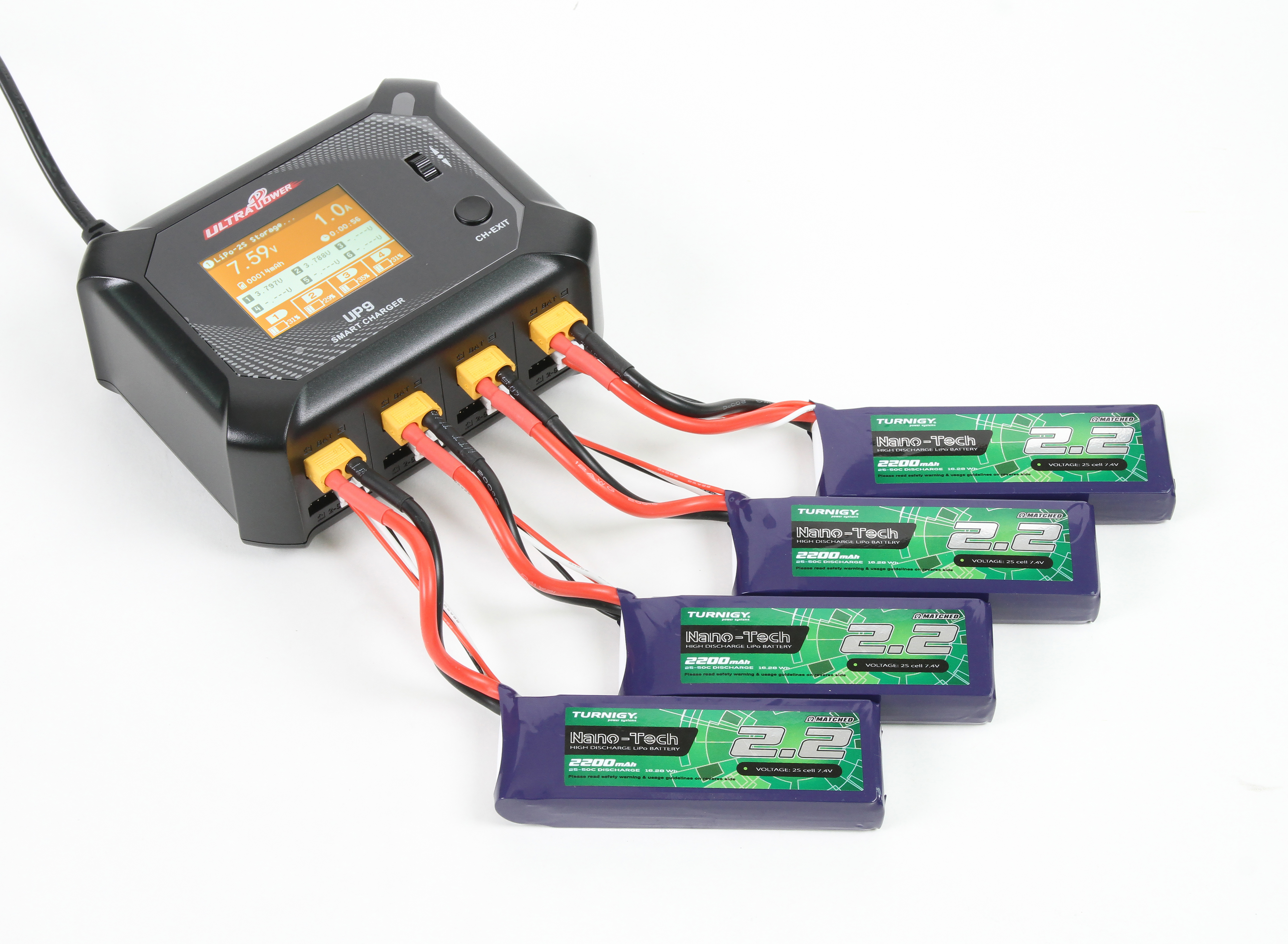
Chapter 2: Fundamentals of Fast Charging Technology
2.1 The quick charging capability of lithium polymer (LiPo) batteries depends on three key factors:
- Electrode material: The HobbyKing Graphene Panther series uses a multi-layer graphene coating, increasing lithium-ion migration speed by 300%.
- Electrolyte formulation: Turnigy Nano-Tech's patented electrolyte can withstand a current density of 15A/mm²
- Heat dissipation design: A 3D honeycomb-shaped electrode structure reduces thermal resistance to one-fifth of that of traditional batteries
2.2 Discharge Rate (C-Rate) and Charging Relationship
50C Battery: The maximum charging current is typically 2C (e.g., a 5000mAh battery supports 10A fast charging)
100C Battery: Supports 5C charging (up to 25A at the same capacity), but requires additional equipment:
- Minimum 150W power charger (e.g., Turnigy Reaktor T240 150W)
- 10 AWG silicone wire (HobbyKing SKU: HK-10AWG-S)
- Infrared temperature monitoring system (automatically reduces current when temperature exceeds 50°C)
Additionally, fast charging for LiPo batteries is not simply about increasing the current; it involves the coordinated operation of multiple factors, including the charging protocol, cell structure, temperature control system, and management chip. Specifically, this includes the following aspects:
- High-rate current handling capability (C-Rating) The “C” value indicated on the battery represents the current that can be withstood per unit capacity per hour. For example, a 5000mAh battery with a 100C rating can theoretically withstand a peak current of 500A, laying the foundation for high-rate fast charging.
- Smart charger matching mechanism Models such as HobbyKing's ToolkitRC and Turnigy Reaktor support high current output and multiple safety controls, making them suitable for fast charging of batteries with different C ratings.
- Cell Balancing System During fast charging, voltage differences between cells may be amplified, so a charger with automatic balancing (Balance) functionality is essential, particularly for 6S or higher battery packs.
- Heat Dissipation and Protection Mechanisms High-rate charging causes significant battery heating, so high-quality cells must have an effective thermal management system, such as graphene coating or metal casing design. HobbyKing widely adopts these features in its premium LiPo products.
Practical Performance of 100C LiPo Fast Charging
In high-performance RC models, the fast charging technology of 100C LiPo batteries pushes charging efficiency to new heights. After three years of real-world testing on race tracks, the HobbyKing technical team has developed this comprehensive ultra-fast charging solution.
Core Equipment Combination
Charger Selection: A professional device with a minimum power output of 300W is required. The Turnigy Quad 400W features silicon carbide MOSFET modules, maintaining over 93% energy conversion efficiency during 5C charging.
Connector Upgrade: Traditional XT60 connectors experience significant temperature rise at 25A continuous current. We recommend upgrading to HobbyKing's 8mm gold-plated connectors (SKU: HK-GOLD-5MM), which reduce contact resistance to 0.2mΩ.
Cooling System: A dual-pronged cooling solution is essential.
- Active Cooling: Install a 4020 turbine fan (airflow ≥ 5 CFM).
- Passive cooling: Use aluminum nitride ceramic heat sinks (thermal conductivity ≥ 180 W/mK)
Environmental monitoring network
- Distributed temperature sensing: Install K-type thermocouples at three critical points on the battery surface
- Voltage sampling system: 16-bit ADC ensures ±0.5 mV accuracy
- HobbyKing's specially developed Telemetry Hub enables real-time visualization of all parameters
2.2 Dynamic charging algorithm analysis
Ultra-fast charging of a 100C battery is not simply a matter of increasing the current; it is a precisely controlled dynamic process:
Three-stage intelligent regulation
- Pre-activation stage (0-3.8V/cell)
- Use a 0.5C pulse current to wake up the battery
- Simultaneously detect the internal resistance balance of all cells
- Temperature must be stable within the 25±3°C range
- Constant current acceleration stage (3.8-4.15V/cell)
- Current rises in a ramp-like manner, increasing by 0.5C per minute
- Real-time calculation of dQ/dV values to prevent lithium plating
- Automatically reduces current by 0.5C when ΔT > 5°C
- Saturation Correction Stage (4.15-4.20V/cell)
- Switches to CV mode and gradually reduces current
- Balance current is increased to three times the conventional mode level
- Predicts the optimal cutoff point based on HobbyKing's patented algorithm
Key Parameter Thresholds
- Voltage fluctuation tolerance: ±15 mV
- Temperature change rate: <2°C/min
- Balancing current difference: <5%
2.3 Safety Protection System
Ultra-fast charging must be equipped with a multi-layered protection network:
Physical Protection Layer
- Explosion-proof housing made of UL94 V-0 rated flame-retardant material
- Pressure relief valve set to open at 150 kPa
- Silicone seal rings prevent electrolyte vapor leakage
Electronic Protection Layer
- Three-level overcurrent protection:
- Hardware comparator (response time < 50 μs)
- Software watchdog (verified every 100 ms)
- Mechanical fuse (final barrier)
- Voltage recall system: Records waveforms of the last 10 abnormal events
Operational Guidelines
- Must be performed before charging:
- Connector insertion/extraction force test (3–5 N recommended)
- Insulation resistance test (>100 MΩ)
- Environmental humidity detection (<60% RH)
- Prohibited during charging:
- Moving or vibrating the device
- Covering the heat dissipation channels
- Connecting batteries from different batches in parallel
2.4 Performance Test Data
In HobbyKing laboratory's temperature-controlled environment (25±1°C):
6S 5000mAh 100C battery test
- Traditional 1C charging:
- Total time: 68 minutes 23 seconds
- Energy efficiency: 91.2%
- Temperature rise: 14.3°C
- 5C ultra-fast charging:
- Total charging time: 11 minutes 47 seconds
- Energy efficiency: 88.7%
- Temperature rise: 28.5°C
- Cycle life: Maintains >80% capacity after 280 cycles
Advantages in racing scenarios
- Can complete 8 full charge/discharge cycles on practice days
- Charging time reduced by 76% between qualifying rounds
- 40% improvement in battery consistency before the race
100C Lipo fast charging batteries represent the high-performance achievements of current LiPo battery technology. Typically used with high-current smart chargers, they can achieve actual charging speeds of 5C to 10C. For example, a 6000mAh 100C battery with a charging current set to 30A can theoretically be fully charged in 12 minutes, greatly improving equipment turnover efficiency
HobbyKing's Turnigy Graphene Panther series and Nano-Tech Plus 100C series are specifically designed for such high-intensity applications. They perform exceptionally well in RC short-track racing, 1/8 off-road, and FPV racing scenarios, supporting high-rate discharge and rapid recovery. When paired with AC/DC dual-mode chargers, they enable stable and fast recharging in both competition and outdoor environments.
However, 100C fast charging also poses challenges to battery lifespan. Without proper control, discharging at maximum rate every time will significantly shorten battery life. Therefore, it is recommended to use intelligent charging strategies in daily use, such as temperature monitoring, staged charging, and limiting the charging cutoff voltage.
50C vs 100C Charging Speed Comparison Analysis
When users are selecting products, “50C vs 100C charging speed” is often a key consideration. Although the two have theoretically double the output power when their capacities are the same, not all real-world applications require 100C speed.
50C batteries are typically suitable for entry-level and mid-range RC model users, supporting higher discharge rates but with more conservative charging speeds, with charging rates typically ranging from 1C to 3C. They are best paired with lower-power AC chargers, offering higher safety margins and longer cell lifespan.
100C batteries are more suited for high-end users and professional racing applications, supporting high-rate discharge and fast charging. They are ideal for scenarios requiring high power output over short periods, such as FPV racing or 1/5 scale monster trucks. However, they require high-quality intelligent chargers and stricter environmental temperature control conditions.
In summary, if your primary application does not require frequent rapid cycling, a 50C battery will meet the needs of the vast majority of users. If you demand ultra-fast startup and high-intensity flight time, we recommend the 100C product, paired with HobbyKing's high-performance charging system.
HobbyKing's Technical Advantages in Fast Charging
As a leading global RC power brand, HobbyKing has been deeply involved in the LiPo battery quick charging field for many years, with extensive experience in product R&D and ecosystem development:
- Highly compatible charger matrix includes multiple brand series such as Turnigy and ToolkitRC, supporting 1S to 6S batteries and maximum charging currents of 15A to 30A.
- Multiple high-rate battery series ranging from 50C, 70C to 100C, including product lines such as Nano-Tech, Graphene Panther, and Heavy Duty, balancing endurance and high-rate performance.
- Intelligent temperature control and cell protection mechanisms HobbyKing employs industry-leading BMS chip technology to achieve temperature monitoring, automatic power cutoff, overvoltage protection, and other multi-layered safeguards.
- Global warehousing and after-sales service provide fast delivery support and technical assistance for high-rate users, ensuring a seamless experience for high-performance users.
Professional Fast Charging Techniques and FAQs
6.1 Racing Team Secrets
- Preheating Technology: Use the Turnigy Battery Warmer to maintain a temperature of 40°C (enhances ion activity)
- Pulse Charging Method: Charge at 5C for 30 seconds with a 1-second interval (reduces polarization effects)
- Data Logging: Use the HobbyKing Telemetry module to optimize the charging curve
6.2 Frequently Asked Questions
Q1: Can a 100C battery be charged with a standard charger?
Yes, but with restrictions:
- Maximum current must not exceed the charger's rated output
- Balance charging must be disabled (use only the main port)
- Upgrading to the HobbyKing Mega series charger is recommended
Q2: Does fast charging shorten battery life?
Minimal impact with proper operation:
- 5C fast charging reduces cycle life by approximately 15%
- Combined with monthly deep cycles, 95% capacity can be restored
Q3: How can I determine if a battery supports true 100C charging?
Three-step verification method:
- Check the HobbyKing official certification list
- Measure the internal resistance change during 1C vs. 5C charging (should be <20%)
- Conduct three consecutive fast charging tests (capacity decay <3%)
Quick Charging Operation Recommendations and Safety Warnings
To achieve truly efficient and safe quick charging of LiPo batteries in everyday use, users should follow the following operating principles:
- Prioritize the use of original batteries and chargers that support high-rate charging to ensure compatibility;
- Charge the battery at room temperature (10°C to 35°C) and avoid operation in high-temperature or low-temperature environments;
- Do not leave the battery unattended during charging and perform charging in a well-ventilated area;
- Gradually increase the charging current to avoid using the maximum rate immediately;
- Regularly check the battery's health status, and immediately cease use if any issues such as cell imbalance or swelling are detected.
HobbyKing recommends that users equip each high-rate LiPo battery with a safety charging bag to further enhance protection during the charging process.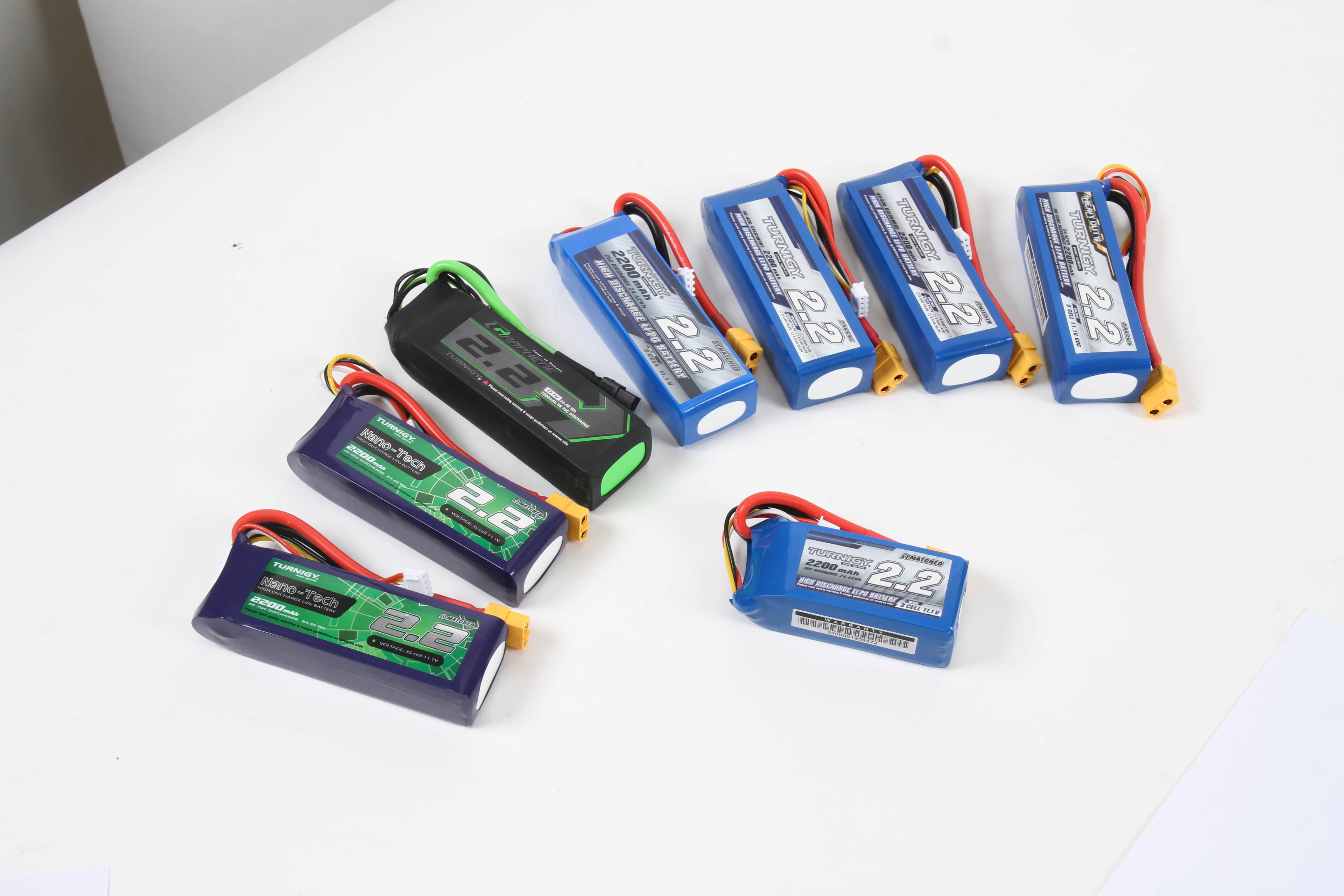
Safeguarding Speed with Technology
In high-performance fields such as remote-controlled models, electric aircraft, FPV racing, and industrial automation, competition in terms of time and efficiency is becoming increasingly fierce. As one of the core power sources, LiPo batteries' charging speed and safety performance have become the most important indicators for users. The “LiPo battery quick charging” technology is the key breakthrough that addresses this pain point.
In the past, users often took risks by using non-standard methods to speed up charging in order to reduce waiting times, but this not only damaged the batteries but also posed safety hazards. Today, with the emergence of high-rate products like “100c lipo fast charging,” users can finally achieve true “ultra-fast charging” while ensuring safety. HobbyKing is at the forefront of this power revolution, leading the industry from high-performance cell development, intelligent charger design, to the establishment of a comprehensive after-sales and recycling system.
However, technological advancements also bring challenges, especially when faced with the choice between “50C vs 100C charging speed.” How should users balance their needs? If you're a casual user or a light racing enthusiast, a 50C-rated battery will fully meet your needs for both range and performance, offering stability, safety, and excellent value for money. However, if you're actively involved in racing or seeking the fastest response times and shortest charging times, a 100C battery is undoubtedly your best choice. Of course, regardless of your choice, reliable intelligent charging equipment is essential.
HobbyKing's professional recommendation is: When selecting a charging solution, do not simply pursue “faster is better.” Instead, customize the most suitable “charging ecosystem” based on actual application scenarios, device characteristics, and battery specifications. This philosophy is embedded in every aspect of our product design, from the Turnigy Graphene Panther series batteries to the Reaktor and ToolkitRC smart chargers, each product is designed to enhance the user experience in LiPo battery quick charging.
Additionally, HobbyKing places a strong emphasis on environmental sustainability. As fast-charging technology becomes more widespread, concerns about battery cycle life and recycling have grown. We encourage users to extend battery life through proper charging practices and to safely recycle used LiPo batteries through our partner network or local environmental initiatives. Technological advancement and environmental protection are not mutually exclusive; at HobbyKing, they are complementary paths toward a sustainable future.
In the future, with the integration of new technologies such as artificial intelligence, battery management systems (BMS), and cloud-based data analysis, LiPo quick charging will no longer be merely a competition between “current” and “time,” but will evolve into a new era of intelligent management, predictive maintenance, and remote control. HobbyKing will continue to invest in research and development to empower global RC and power battery users with faster, more stable, and more environmentally friendly experiences.
Let us look forward to a future where, whether you are a street racer, an aerial FPV explorer, or a professional enthusiast, you can realize the dream of “fast charging, stable performance, and long-range flight” within HobbyKing's technological ecosystem.
Category
Tags
Category
Tags
ベストセラー商品はこちら
 11%
OFF

Avios (PNF) Grand Tundra 2 STOL Sports Plane EPO 1700mm (Green/Silver)
SKU 9499670637
$327.99$369.0018%
OFF
H-King パラモーター V2 w/LEDライトバー 2400mm (PNF)
SKU 9310670504
$155.99$189.9913%
OFF
H-King (PNF) Flybeam 2 Night Flyer w/LED Light System 1092mm (EPO)
SKU 9310670554
$156.99$179.9915%
OFF
H-King (PNF) KitFox Sport Plane 1100mm/1250mm (EPO)
SKU 9898670063
$169.99$199.9915%
OFF
Durafly Curtiss P-40 Warhawk V2 "Aleutian Tiger" 1100mm (PNF)
SKU 9306670734
$203.99$239.9915%
OFF
Durafly Tundra V3 "Inspire" (PNF) スポーツモデル フラップ付き 赤/銀 EPO 1300mm (51")
SKU 9499670588
$211.99$249.0033%
OFF
ホビーキング スポーツ・ホーク 「ARF-Plus」105mm EDF ジェット機(リトラクト装置、サーボ、LED ライト付き)
SKU 9306670706
$804.99$1,199.0015%
OFF
HobbyKing®™セイウチグライダーフラップEPO 1400ミリメートル(PNF)/ワット
SKU 9306000019
$83.99$98.9920%
OFF
Durafly (PNF) Rare Bear Reno Racer 680mm EPO (Gold/White)
SKU 1021670038
$135.99$169.9920%
OFF
Durafly (PNF) Rare Bear Reno Racer 680mm EPO (Green/White)
SKU 1021670037
$135.99$169.9920%
OFF
Durafly Tundra TPX (PNF) EPP Profile 3D/Aerobatic Plane 1050mm
SKU 1021670039
$143.99$179.99
Turnigy APEX 2200mAh 3S 11.1V 180C LiPo Battery with XT60 for 7 inch FPV Drone and Planes
SKU 9067110092
$19.99$25.99
Turnigy 3300mAh 3S (11.1V) 30C Shorty LiPo Battery Pack w/XT60
SKU 9067110010
$18.99$22.99