blogue
Pesquisar um artigo
FPV Drone Laws & Registration USA (2025): TRUST, Remote ID, FAA Rules | HobbyKing
RC Black Friday Buying Guide 2026: What to Buy & How to Save
Battery
2200mAh LiPo Guide: 2S vs 3S vs 4S for RC | HobbyKing
Battery
2200mAh LiPo Guide: 2S vs 3S vs 4S for RC | HobbyKing
2200mAh LiPo Battery Guide: 2S vs 3S vs 4S (and when 6S actually makes sense)
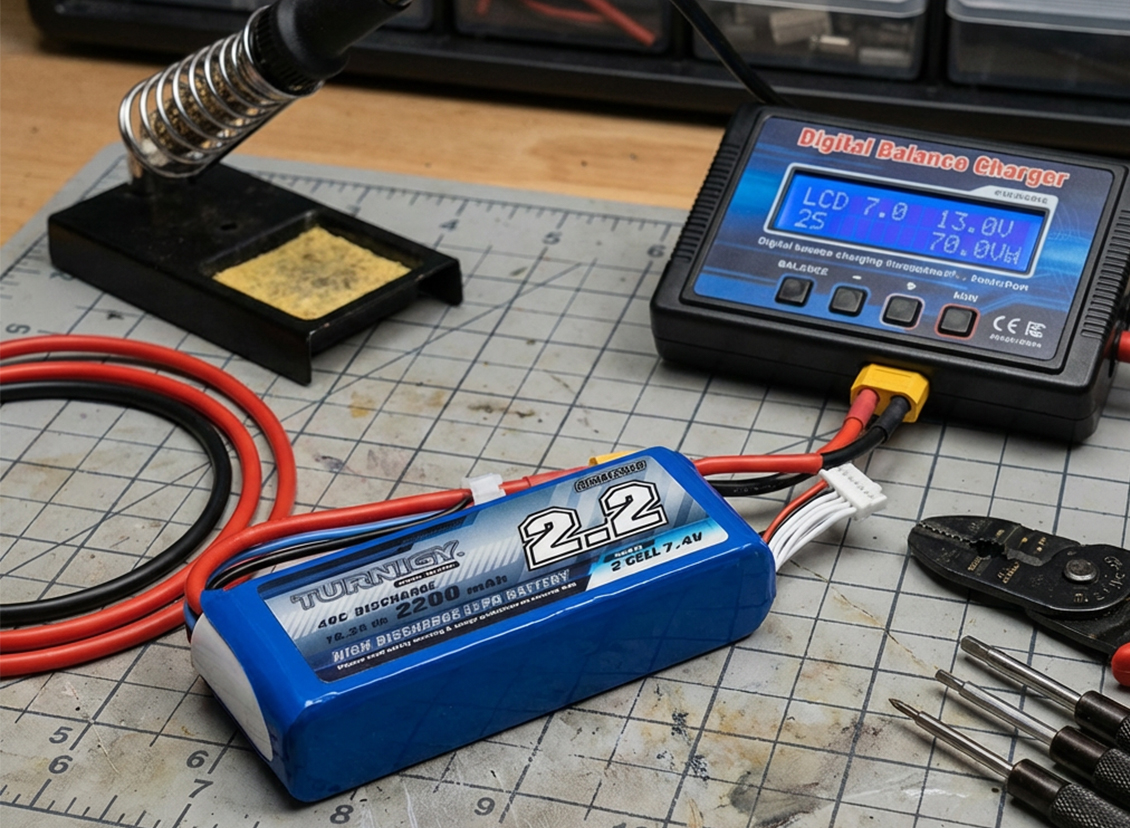 2200mAh is a classic RC battery size — voltage (2S / 3S / 4S / 6S) is what really changes how it feels in real use.
You know the moment: it’s the night before the field, you open the drawer and realize you’ve collected a bunch of 2200 mah lipo packs… but they’re not the same. One is a 2S 2200mAh LiPo (7.4V), another is a 3S 2200mAh LiPo (11.1V), and there’s a 4S 2200mAh LiPo (14.8V) staring back at you.
If you fly RC planes, it’s usually a “fits great / CG feels weird” difference. If you run RC cars, it’s often “traction & heat.” On boats, it becomes “continuous load & cooling.” This guide is the practical way to choose the right 2200mah lipo battery without guessing—or buying a pile of adapters you hate.
Quick picker: choose 2S, 3S, 4S or 6S 2200 by use case
This is the “checkout decision” view: what each voltage is commonly used for, what you’ll feel, and what you must confirm before buying. (Yes, searches like “3s 2200mah lipo xt60” exist for a reason.)
| Pack you’re looking at | Most common use cases | What you’ll notice | Confirm before buying |
|---|---|---|---|
| 2S 2200mAh LiPo (7.4V) | Some 2S-rated planes, light RC cars, casual boats | Calmer power, easier traction, usually less heat | Bay/tray fit, connector type, charger supports 2S balance charge |
| 3S 2200mAh LiPo (11.1V) | RC planes (trainer/sport), general “field day” flying | Balanced throttle range; predictable climb and cruise | Plane CG travel, connector standard (XT60/EC3/Deans/IC3), wire reach |
| 4S 2200mAh LiPo (14.8V) | Sport planes designed for 4S, faster cars, higher-load boats | More punch/authority; heat shows up faster if mismatched | ESC/motor rating, prop/gearing corridor, cooling/headroom |
| 6S 2200mAh LiPo | True 6S aircraft/helis or high-voltage builds | High-voltage efficiency (when the system matches) | Everything is genuinely 6S-rated; charging discipline |
2S 2200mAh LiPo: where it actually fits
A 2s 2200mah lipo is the “calm” option. People choose it when they want controllable power and lower heat stress— especially for setups that get slippery or hot when overpowered.
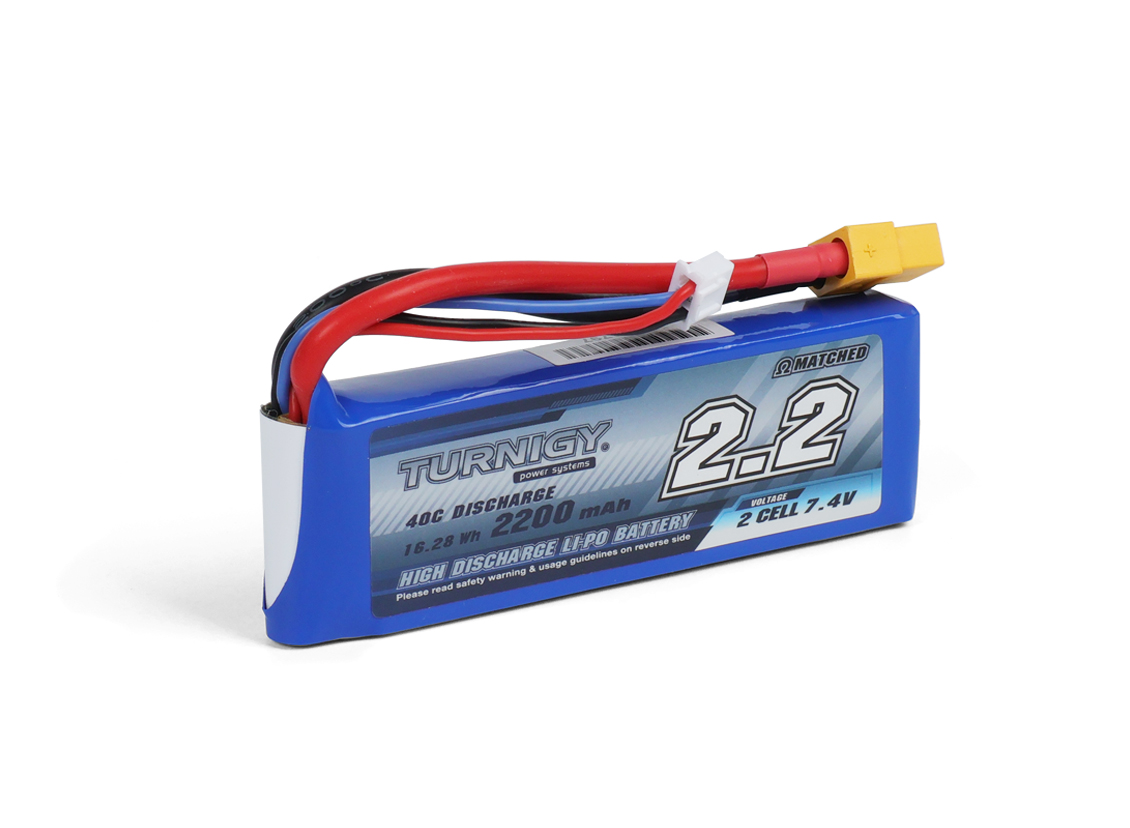 Turnigy 2S 2200mAh pack (XT60).
Best-fit scenarios
- RC car: beginner-friendly power; easier traction; less thermal drama
- RC boat: casual running where heat is the enemy and cooling is basic
- RC plane: only if the airframe is designed for 2S (don’t force it)
What you’ll feel
Throttle feels forgiving. You can stay smoother on the stick and still get predictable response. The trade-off is obvious: if a plane is built for 3S, 2S can feel underpowered—longer takeoff runs and a lazy climb.
2S connectors: what you’ll see and how to shop it
Connector isn’t “a detail”—it’s whether you fly that day. For 2S, you’ll see a mix depending on the RC segment. If you’re buying multiple packs, standardize rather than living on adapters.
| Common connector | Where it shows up | Practical buyer move |
|---|---|---|
| Traxxas-style | Car ecosystems that prefer their own plug | Stay consistent across packs, or convert once (not repeatedly via adapters) |
| Deans / T-plug | Older planes/cars | If you’re buying a set, consider migrating to a modern standard for less friction |
| XT60 | General RC standard | Best “one standard” choice if you’re building a mixed fleet |
balance charger + correct connector (or one backup adapter), a LiPo safety bag, and basic securing gear (straps/foam) so the pack can’t slide.
3S 2200mAh LiPo: the plane workhorse
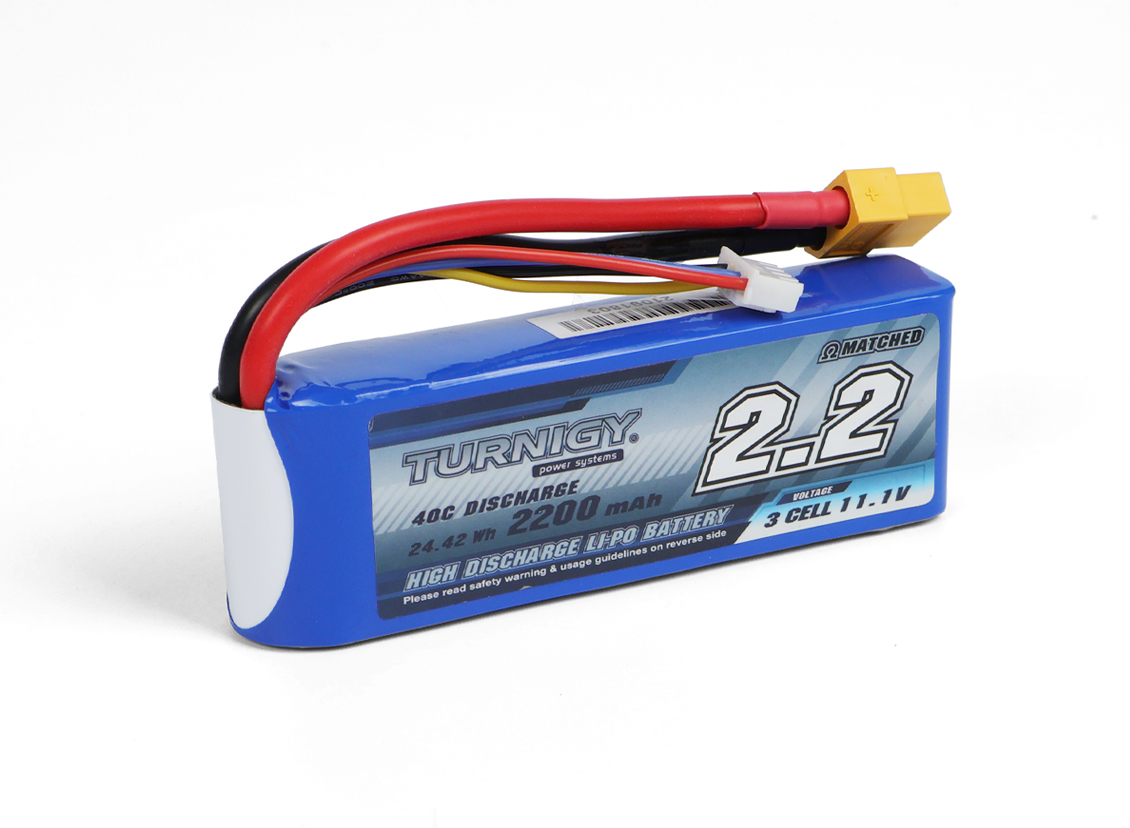
If you searched 3s 2200mah lipo or “11.1V 2200mAh LiPo battery,” you’re in the most common RC plane corridor. For trainers and many sport planes, 3S 2200 is the pack that keeps weekends simple: it fits, balances, and gives a predictable throttle range.
What it feels like in the air
You get a clean mid-throttle cruise window and confident takeoff/climb without feeling like the plane is “on a knife edge.” Most pilots notice the difference as consistency: the plane behaves the same from pack to pack when everything fits properly.
What can still go wrong
The most common “3S 2200 disappointment” is not power—it’s fit and balance. A slightly thicker pack can force awkward mounting, and CG can drift if you can’t position the pack cleanly.
3S 2200 connectors: XT60, EC3, Deans, IC3
If you buy 3S 2200 in multiples, connector choice becomes a lifestyle decision. Keep it boring: pick the connector your fleet already uses, or standardize now while you’re building your “set.”
| Connector | Why people stick with it | Buyer guidance |
|---|---|---|
| XT60 | Common across brands; accessories are easy | Great default if you want fewer adapters and broader compatibility |
| EC3 | Common on many Horizon-era plane setups | Fine if your fleet is already EC3; keep it consistent across your set |
| IC3 | Convenient if you’re committed to a Smart ecosystem | Great when you’re all-in; otherwise it can narrow your choices |
| Deans / T-plug | Legacy fleets still running strong | Works, but consider migrating if you’re buying new packs in volume |
Inside the same 2200 spec, pilots usually feel differences as how steady it stays under load and how predictable it is over time. In the HobbyKing range you’ll commonly see options across Turnigy (easy daily-driver feel), Nano-Tech (steadier under load), Graphene (performance-leaning), and BOLT-X LiHV (only if you’re disciplined with charging/storage).
4S 2200mAh LiPo: more authority, more heat
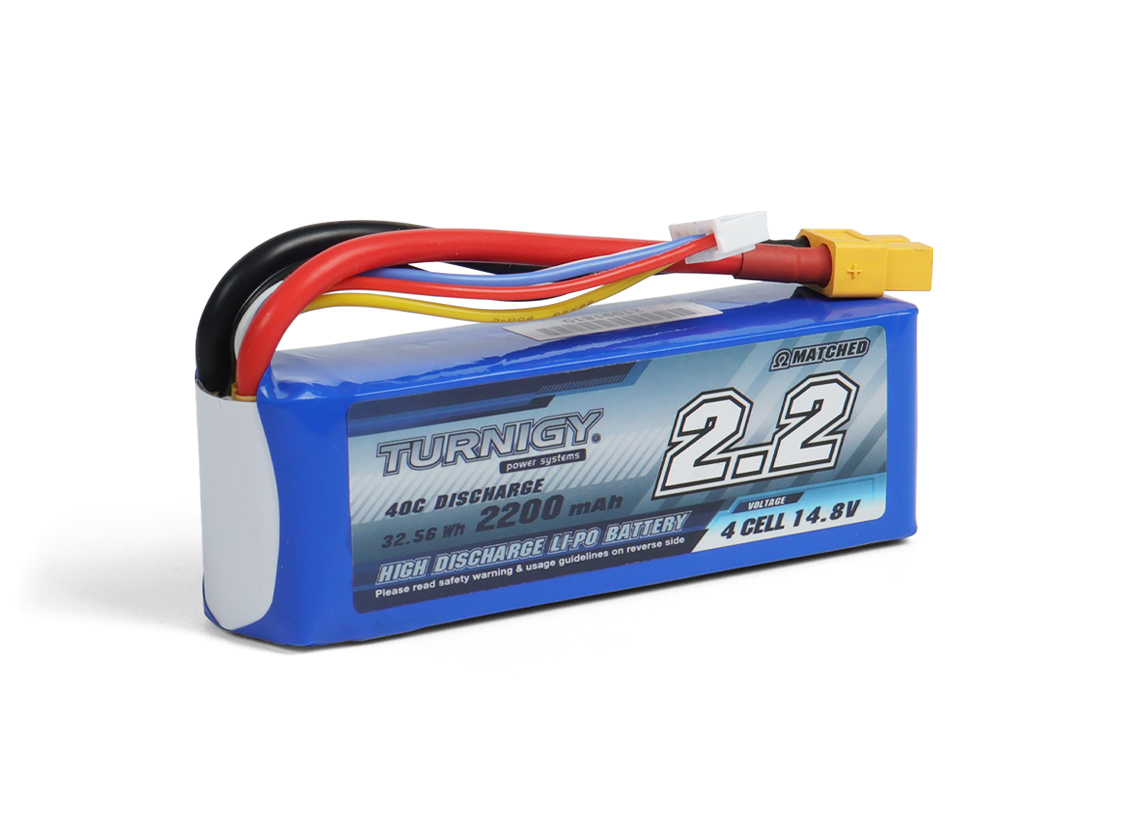
A 4s 2200mah lipo is the “more authority” choice: stronger climbs for sport planes, faster car response, and more headroom for higher-load boats. It can feel fantastic—if your system is designed for it. If not, 4S is where heat and failures show up quickly.
Where it makes sense
- RC plane: sport setups designed around 4S
- RC car: when you’re ready to manage temps, gearing, and traction
- RC boat: when cooling and ESC headroom are real
What you’ll feel (and the trade)
The setup feels more “awake.” Response and climb improve—but so does stress. The most common regret is pushing a 3S corridor into 4S without rethinking prop/gearing/cooling.
Confirm your ESC and motor are genuinely 4S-rated and you have a plan for heat. “It fits the tray” doesn’t mean “it fits the system.”
6S 2200mAh LiPo: niche, but useful
6S 2200 is rarely a “casual buy.” It’s a system choice—common in true 6S aircraft/helis and specialty builds. When the platform is designed around 6S, voltage can deliver power more efficiently at lower current—but only if everything matches.
 Turnigy 6S 2200mAh pack (XT60).
Don’t buy 6S 2200 hoping it will “upgrade” a 3S/4S setup. Buy it when the platform is already a 6S platform.
How to compare brands without overthinking it
Most people don’t lose money because they picked the “wrong brand.” They lose money because they picked the right capacity… in the wrong shape, with the wrong plug, or with a setup that runs too hot.
| What you’re really comparing | Why it matters | What it looks like in real life |
|---|---|---|
| Connector options | The wrong plug ruins a flying day | This is why people search “3s 2200mah lipo xt60”. They want “plugs in, no drama,” not a drawer of adapters. |
| Pack shape / dimensions | “2200” can still not fit or wreck CG | Planes care about thickness and CG travel. Cars often prefer hardcase. Boats care about secure mounting and wire routing. |
| How it holds up under your typical load | “Feels fine” vs “sags when I ask for power” | If you do punchy climbs or higher-load runs, a steadier pack just makes the setup feel more consistent—pack after pack. |
| Support when something arrives wrong | Not fun, but it’s part of the buy | If you’re buying a set of identical packs, you want a clear, trackable resolution path if something arrives damaged or off-spec. |
Decide your voltage first (2S/3S/4S). After that, don’t get stuck in spec-sheet trivia—shop for the pack that fits your bay/tray and matches your plug.
Where HobbyKing usually wins for 2200mAh isn’t a magical number on the label—it’s that you can typically find more choices inside the same spec (different shapes, common connector options, and multiple series tiers), so you’re more likely to buy the one that actually suits your setup instead of “making it work.” For a lot of people, that’s the real value: more options + better price-to-performance, especially when you’re building a battery pool and buying more than one.
And yes—if something shows up wrong, a clean support/returns process matters. It’s not the exciting part of the hobby, but it’s the part that keeps “I bought a set” from turning into a headache.
Before you buy: 3 checks + common regrets
Most people don’t waste money choosing the “wrong brand.” They waste money buying a pack that doesn’t fit, doesn’t balance, or doesn’t plug in. Do these three checks once and the whole 2200 buying process becomes boring (in a good way).
| Specific pitfall | What happens in real life | The fix you’ll actually use |
|---|---|---|
| Battery is too thick/long | Arrives… and doesn’t fit the bay/tray safely | Measure the bay/tray; shop by dimensions, not only “2200mah” |
| CG / balance won’t work (planes) | Takeoff/landing feels wrong; plane feels twitchy or nose-heavy | Use pack position to tune CG; if you run out of travel, change pack shape/weight |
| Connector mismatch | You’re grounded, or you fly with a sketchy adapter chain | Standardize connectors; keep one high-quality adapter as backup only |
Take clear photos, keep packaging, and go through the official support path so the case stays trackable. It’s the difference between “going in circles” and getting a clean resolution.
How to choose within the 2200 range
After you pick 2S/3S/4S, the final decision is “what kind of user are you on a normal weekend”: do you want long cycle life, steadier behavior under load, or a set of identical packs you can rotate all season?
Daily-driver durability and cycle life
If you fly trainers/sport planes or do routine RC running, consistency matters more than hype. Pick a stable line you can buy again without surprises.
- Good fit for: RC planes, routine RC weekends
- What you’ll notice: fewer “one pack feels weird” days
- HK lines to browse: Turnigy, Nano-Tech
Stronger discharge / punchy setups
If your setup demands harder climbs or higher load, you’re buying steadier behavior under load—not “free speed.”
- Good fit for: sport planes, faster cars, higher-load boats
- What you’ll notice: less sag when you ask for power
- HK lines to browse: Graphene
Buying a set and being done
The most common 2200 behavior is simple: you don’t want one pack—you want a small fleet of identical packs. It makes charging and performance predictable.
- 4–6 packs = a comfortable afternoon without stress
- 6–10 packs = fewer charger decisions, more flying
- Pro move: buy together so they age similarly
Optional: LiHV (only if your habits are disciplined)
If you already have a charger that supports LiHV and you’re consistent with storage routines, LiHV can feel a bit more energetic early in the run.
- Good fit for: disciplined chargers who want a livelier top end
- HK line to browse: BOLT-X LiHV
- Reality check: don’t add complexity if you’re still building your routine
What you’ll also buy
Batteries are only half the “it just works” experience. These are the add-ons that stop field days from getting stupid.
| Accessory | Why it matters | Start here |
|---|---|---|
| Charger (balance charging) | Correct cell settings + consistent routine is what keeps packs healthy | Chargers |
| LiPo safety bag / storage | Safer transport and storage; the boring gear that prevents real problems | Pick a size that actually fits your packs—don’t buy the tiny one “because it’s cheaper.” |
| Straps / foam / mounting | Stops pack movement and helps you hit CG on planes | Any simple strap/foam solution beats “loose pack bouncing around.” |
| One quality adapter (backup) | Saves a day when you show up with the wrong plug—once | Keep it as insurance, not your permanent wiring plan |
FAQ
Choose by the platform’s intended voltage corridor. 2S is often about controllability and lower heat. 3S is the balanced workhorse (especially for RC planes). If your plane is built for 3S, dropping to 2S can feel underpowered. If your car/boat overheats or breaks traction easily, 2S can be the smarter choice.
4S can deliver stronger climb and faster response, but it also increases stress and heat. Only move to 4S if the ESC/motor/prop corridor is designed for 4S. Otherwise it’s not an “upgrade”—it’s a mismatch.
If you don’t want to depend on charging at the field, 4–6 packs is a comfortable start. If you fly continuously and hate downtime, 6–10 identical packs makes the day feel effortless.
Retire packs that puff significantly, get unusually hot in normal use, have damaged wiring, or show a big performance drop compared to similar packs. Predictability is the real standard: when the pack stops behaving consistently, it stops being worth the risk.
Use your charger’s storage mode if you won’t fly again soon. The easiest habit is consistency: don’t leave packs fully charged for long periods, and store them in a safe bag/box.
Category
Category
Compre os nossos melhores vendedores
 11%
OFF

Avios (PNF) Grand Tundra 2 STOL Sports Plane EPO 1700mm (Green/Silver)
SKU 9499670637
$327.99$369.0018%
OFF
H-King Paramotor V2 com barra de luzes LED 2400mm (PNF)
SKU 9310670504
$155.99$189.9913%
OFF
H-King (PNF) Flybeam 2 Night Flyer w/LED Light System 1092mm (EPO)
SKU 9310670554
$156.99$179.9915%
OFF
H-King (PNF) KitFox Sport Plane 1100mm/1250mm (EPO)
SKU 9898670063
$169.99$199.9915%
OFF
Durafly Curtiss P-40 Warhawk V2 "Aleutian Tiger" 1100mm (PNF)
SKU 9306670734
$203.99$239.9915%
OFF
Durafly Tundra V3 "Inspire" (PNF) Modelo Esportivo com Flaps Vermelho/Prata EPO 1300mm (51")
SKU 9499670588
$211.99$249.0033%
OFF
HobbyKing Sports Hawk "ARF-Plus" Jato EDF 105mm com Retráteis, Servos e Luzes LED
SKU 9306670706
$804.99$1,199.0015%
OFF
HobbyKing® ™ Walrus Glider w / Flaps EPO 1.400 milímetros (PNF)
SKU 9306000019
$83.99$98.9920%
OFF
Durafly (PNF) Rare Bear Reno Racer 680mm EPO (Gold/White)
SKU 1021670038
$135.99$169.9920%
OFF
Durafly (PNF) Rare Bear Reno Racer 680mm EPO (Green/White)
SKU 1021670037
$135.99$169.9920%
OFF
Durafly Tundra TPX (PNF) EPP Profile 3D/Aerobatic Plane 1050mm
SKU 1021670039
$143.99$179.99
Turnigy APEX 2200mAh 3S 11.1V 180C LiPo Battery with XT60 for 7 inch FPV Drone and Planes
SKU 9067110092
$19.99$25.99
Turnigy 3300mAh 3S (11.1V) 30C Shorty LiPo Battery Pack w/XT60
SKU 9067110010
$18.99$22.99