blogue
Pesquisar um artigo
FPV Drone Laws & Registration USA (2025): TRUST, Remote ID, FAA Rules | HobbyKing
RC Black Friday Buying Guide 2026: What to Buy & How to Save
Battery
Cars
Swollen LiPo: Keep or Retire?
Battery
Cars
Swollen LiPo: Keep or Retire?
Swollen LiPo: Keep or Retire?
Most people do not start worrying about a LiPo because of a chart or a spec sheet. They worry because the pack in front of them suddenly looks a little off. It still works. The voltage does not look terrible. Maybe it only feels a little thicker than before. So it goes back in the bag, and the decision gets pushed down the road.
That is usually where people get into trouble. The real job here is to figure out whether you are looking at a false alarm, an early warning sign, or a pack that is already done.
Contents
- What a swollen LiPo really means
- False alarm, early warning, or done?
- What swelling is not
- What a puffed LiPo actually looks and feels like
- Why LiPo packs swell
- What to do in the next 5 minutes
- About those old disposal tips you still see online
- When the pack is done
- A quick check before you keep using the pack
- How to reduce the chance of puffing next time
- FAQ
People usually search this topic because they already have the battery in hand. Maybe one side is not as flat anymore. Maybe it feels softer than the others. Maybe it took a crash last week and now it looks just different enough to bother you. At that point, the useful answer is not just “swollen batteries are dangerous.” The useful answer is how to tell what you are actually looking at, what to do right away, and when to stop arguing with yourself and retire the pack.
What a swollen LiPo really means
RC LiPo batteries are usually built from pouch cells. When those cells are healthy, the pack body stays flat and square. When the chemistry inside the cell has been stressed enough to generate gas, the body starts changing shape. That is why a bad pack starts to look puffy, rounded, bloated, or ballooned.
The key thing is this: puffing is not just a cosmetic problem. It is a damage signal. A swollen LiPo battery can still power a model and still be on its way out. That is exactly why these packs get pushed too far. They often stay usable just long enough to make people think they have a little more life left.
False alarm, early warning, or done?
This is the part that usually decides whether the pack goes back in the bag or gets pulled out for good.
Not every rough-looking LiPo is truly puffed. At the same time, not every pack that still works is still healthy. The easiest way to make sense of that is to split the problem into three buckets.
| Level | What it usually looks like | What to do next |
|---|---|---|
| False alarm | Loose or wrinkled outer wrap, shallow tray marks, strap pressure marks, or a pack that feels slightly soft while still warm but goes back to normal shape after cooling | Inspect it carefully and keep an eye on it. Do not call it puffed just because it looks rough. |
| Early warning sign | Not clearly swollen yet, but it is coming down hotter than similar packs, sagging earlier, balancing worse, or showing one cell with noticeably higher IR than the others | Take it out of hard-use rotation. Check it more closely before each use instead of waiting for obvious puffing. |
| Done pack | The cell body is visibly thicker, rounded, raised like a pillow, lumpy, or still deformed after cooling | Retire it. Do not keep charging it, flying it, or saving it for “light use.” |
That middle category matters more than most people think. A lot of LiPo batteries do not go from “fine” to “obviously swollen” in one jump. They spend a while running hotter, sagging sooner, and feeling worse pack after pack. That is the stage where people usually keep pushing because the battery has not become a full-on pillow yet.
What swelling is not
Not every LiPo that looks wrong is already a truly swollen LiPo battery. A loose outer wrap, shallow strap marks, a tight battery bay, or a pack that feels slightly soft while it is still warm can all look suspicious without meaning the cell body itself is already puffing.
A better check is to let the pack cool in a safe place, then look at the actual cell shape. If the body is still flat and square, you may be dealing with a false alarm or an early warning sign rather than confirmed swelling. If the pack still looks thicker, rounder, or raised after cooling, stop trying to talk yourself out of it. That is a retirement sign.
| Situation | What it usually looks like | How to judge it | What to do |
|---|---|---|---|
| Loose outer wrap | Wrinkled, baggy, or uneven outside, but the pack body still looks flat | Ignore the wrapper for a moment and check the actual cell shape on a flat surface | Keep watching it. Do not retire it just because the wrapper looks ugly. |
| Warm-after-use softness | Slightly soft or less firm right after landing or running, then firms up again after cooling | Re-check only after the pack has cooled naturally in a safe place | Treat it as a warning sign, not automatic swelling. Watch how it behaves next use. |
| Tight battery bay marks | Side wrinkles, pressure lines, or light dents from straps, foam, or tray walls | Remove the pack and see whether the body still looks flat once the pressure is gone | Keep using it only if the pack body itself still looks normal. |
| Crash pack with later shape change | Looked okay at first, but later one side or one section looks fuller or less square | Judge the shape, not just the voltage or the fact that it still powers the model | Take it out of normal rotation right away and treat it like a damaged pack. |
| Real swelling | Thicker, rounded, raised, domed, or still deformed after cooling | The cell body itself has changed shape | Retire the pack. |
What a puffed LiPo actually looks and feels like
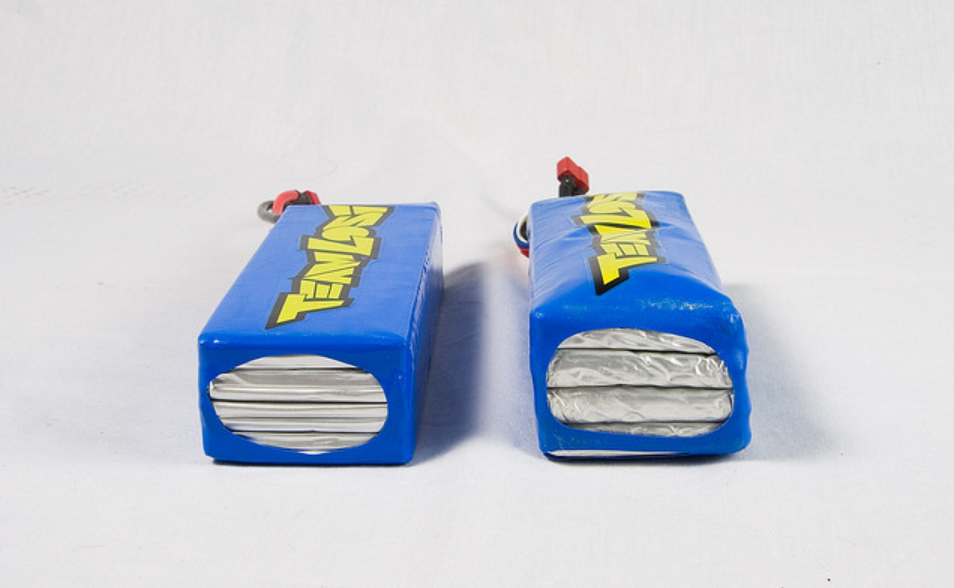
A truly puffed LiPo usually does not just look used. It looks physically different from the way it used to. The battery may be thicker through the middle. The broad faces may no longer look flat. One end or one section may sit slightly proud of the rest of the pack. Instead of looking square from the side, it starts to show a soft belly or rounded bulge.
A good field check is to put the LiPo battery on a flat table and look across the broad face from the side. A healthy pack usually still looks flat even if the outer wrap has wrinkles or wear. A swollen LiPo battery often looks domed, lifted, or rounded, as though the body is pushing outward from inside.
Touch helps too, as long as you use common sense and do not press hard. A gas-swollen area usually feels like a firm pillow. Not soft in a harmless way, but springy. If the raised area feels hard, uneven, or lumpy under the wrap, that is even worse. The exact internal cause is not something you need to diagnose at home. What matters is that the pack is no longer behaving like a normal pouch cell, and that is enough reason to retire it.
Three easy-to-misread situations
- Tight battery bay: the outer wrap gets squeezed and wrinkled, but the pack body is still flat once removed.
- Freshly landed pack: the battery is warm and feels a little soft, but the shape returns to normal after cooling.
- Crash pack: the battery looked fine right after impact, but later one cell section looks fuller, rounder, or less square.
Why LiPo packs swell
Most puffy LiPos do not come out of nowhere. Usually the battery has been hinting at trouble for a while. It may have started coming down hotter than your other packs. It may have begun sagging earlier in the run. One cell may have started drifting more during balance charging. Or it may have taken a hard knock and never really been the same afterward.
In real RC use, swelling usually shows up after one or more of these patterns:
- Too much heat: the pack is being pushed hard every run and keeps coming back too hot.
- Over-discharge: a weak cell keeps getting pulled too low, especially in demanding setups.
- Overcharge or charging mistakes: wrong charger settings or charging a pack that is already compromised.
- Crash or crush damage: the outside may not look terrible, but the layers inside may have been stressed.
- Age and wear: older LiPo batteries with higher internal resistance usually run hotter and recover worse.
Three very common real-world patterns
- You keep using a pack that always comes down hotter than the others because it still “has punch.”
- You keep running an aging pack that sags harder and balances worse, but still technically works.
- You put a crash pack back into service because it looked okay at first, then later notice one side is not flat anymore.
What to do in the next 5 minutes
If the pack looks truly swollen, do not stand there staring at it and trying to rationalize it. Deal with it in the right order.
Immediate action order
- Stop using the pack now. Do not put it back into the model for one more run.
- Disconnect it. If it started swelling during use or charging, stop the session first instead of trying to finish the cycle.
- Move it away from flammable materials. Keep it away from paper, foam, fabric, wood, solvents, and other batteries.
- Put it somewhere safer. A LiPo bag or other fire-resistant, non-combustible location is far better than a drawer or field bag pocket.
- Let it cool and watch it. Pay attention to whether it is getting hotter, smellier, noisier, or more swollen.
- Take it out of rotation. Do not put it back with your good packs and hope you remember later.
If the battery starts swelling during charging, the mistake people make is trying to finish the cycle neatly. Maybe to storage voltage, maybe to full balance, maybe just “one more minute.” That is the wrong instinct. Once a pack is swelling, tidy battery management is over. Risk control is the job now.
About those old disposal tips you still see online
If you have spent any time in RC forums, you have probably seen the old advice already: hook the pack to a bulb, run it flat, maybe salt-water it, then throw it out. People have been repeating some version of that for years.
I am not pretending that advice does not exist. It does. A lot of long-time hobbyists have heard it, and some still use it. But once a pack is visibly swollen, I would not treat that as the moment to start getting creative.
At that point, it is not just an old battery. It is a damaged pack. The smart move is to get it out of use, keep it somewhere fire-resistant, and deal with it through a proper local disposal route for damaged lithium batteries.
When the pack is done
This part should be blunt. If the cell itself is swollen, retire the pack.
Do not talk yourself into one more casual run. Do not tell yourself it will become the backup pack. Do not tell yourself it is only a little puffy. A battery does not need to look catastrophic to be past the point where it belongs in normal service.
| Specific sign | Why it matters | What to do |
|---|---|---|
| Pack body is visibly thicker than before | Cell shape has changed, not just the wrapper | Retire the pack |
| One side or one section is raised or rounded | Likely gas buildup inside part of the pack | Retire the pack |
| Swelling remains after cooling | Not just temporary warmth or softness | Retire the pack |
| Puffing plus unusual heat | Damage is stacking with thermal stress | Stop using it immediately |
| Puffing plus cell imbalance, heavy sag, or much higher IR on one cell | Pack health is deteriorating from multiple angles | Retire the pack |
| Crash history plus later swelling | Physical damage may have started the failure process | Remove it from service |
There is a reason the same pack keeps making you hesitate. Good batteries do not do that. If you keep picking it up and talking yourself into “one more run,” you probably already know where this is going.
A quick check before you keep using the pack
This is the part that helps you catch trouble before the pack turns into an obvious pillow.
Before charging
- Look for shape change, torn wrap, crash damage, or one section that now looks fuller than the rest.
- Check whether the pack still sits flat and square the way it used to.
- Think back to the last use. Was it hotter, softer, or more saggy than normal?
Right after a run
- Compare its heat against your normal packs in the same setup.
- Notice whether voltage sag felt worse earlier than usual.
- Pay attention if the pack feels different from the others, even before it looks obviously puffed.
Over time
- Watch whether one cell keeps showing noticeably higher IR than the rest.
- Notice whether the pack is balancing worse than it used to.
- Do not wait for dramatic swelling before admitting a battery is aging badly.
How to reduce the chance of puffing next time
A lot of swollen packs were giving warnings long before they became visibly puffy. The most useful prevention is not some magical trick. It is noticing those warnings earlier and changing what you do.
- Do not keep running a setup that always brings batteries back very hot.
- Do not keep pushing old packs that are already sagging harder than the rest.
- Let packs cool before charging again.
- Do not over-discharge just to squeeze out a little more runtime.
- Protect packs better in crashes and in tight battery bays.
- Pay attention when one LiPo battery starts behaving differently from the others.
The best habit is not waiting for a pack to become obviously swollen. The best habit is stepping in earlier, when the battery is clearly trending the wrong way but has not become a full-on pillow yet.
The bottom line: if the cell shape still looks normal, slow down and inspect before calling it puffed. But if the cell itself is swollen, stop trying to squeeze another day out of it. Retire the pack and move on.
FAQ
Not in the way most people mean. Once the cell itself is genuinely swollen, the safer move is to stop using it, isolate it, and retire it.
A truly puffed LiPo usually looks thicker, rounded, or raised from the inside. The faces may no longer be flat, one section may bulge like a pillow, and the pack may not sit flat the way it used to.
If you are only seeing wrapper wrinkles, tray marks, or temporary softness while the pack is still warm, slow down and inspect. But if the cell body itself has clearly changed shape, that is no longer a “slightly puffy but safe” situation. Treat it as a retirement sign.
Confirmed swelling is not something to treat as normal. What is common is mistaking wrapper wrinkles, strap marks, tight-bay pressure, or temporary warmth-related softness for real swelling. The key check is whether the cell body itself has changed shape and stays that way after cooling.
The most useful threshold is not a number on a ruler. It is whether the cell body has clearly changed shape. If it has, stop treating it like a normal service pack.
Common causes include repeated overheating, over-discharge, overcharge, crash damage, and simple age. In many cases, puffing shows up after the pack has already been running hotter, sagging earlier, or balancing worse for a while.
A warm pack may feel softer right after use and firmer again after cooling, but real swelling does not get fixed by cooling. If the pack stays visibly thick or rounded after it cools, treat that as a retirement sign.
That is a bad plan. A genuinely swollen LiPo should not be treated like a normal pack that just needs one more cycle. Once the cell itself is puffed, the safer move is to stop using it and prepare it for proper disposal.
Note: This article is a practical decision guide, not a repair guide. Local disposal rules vary, so handle damaged batteries according to your area’s battery recycling or hazardous-waste requirements.
Compre os nossos melhores vendedores
 10%
OFF

AVIOS (PNF) US Coast Guard PBY Catalina w/Landing gear & Retractable Wing Floats & LED Lights EPO 1900mm
SKU 9310670627
$538.99$599.0018%
OFF
H-King Paramotor V2 com barra de luzes LED 2400mm (PNF)
SKU 9310670504
$155.99$189.9913%
OFF
H-King (PNF) Flybeam 2 Night Flyer w/LED Light System 1092mm (EPO)
SKU 9310670554
$156.99$179.9915%
OFF
H-King (PNF) KitFox Sport Plane 1100mm/1250mm (EPO)
SKU 9898670063
$169.99$199.9915%
OFF
Durafly Curtiss P-40 Warhawk V2 "Aleutian Tiger" 1100mm (PNF)
SKU 9306670734
$203.99$239.9915%
OFF
Durafly Tundra V3 "Inspire" (PNF) Modelo Esportivo com Flaps Vermelho/Prata EPO 1300mm (51")
SKU 9499670588
$211.99$249.0033%
OFF
HobbyKing Sports Hawk "ARF-Plus" Jato EDF 105mm com Retráteis, Servos e Luzes LED
SKU 9306670706
$804.99$1,199.0015%
OFF
HobbyKing® ™ Walrus Glider w / Flaps EPO 1.400 milímetros (PNF)
SKU 9306000019
$83.99$98.9920%
OFF
Durafly (PNF) Rare Bear Reno Racer 680mm EPO (Gold/White)
SKU 1021670038
$135.99$169.9920%
OFF
Durafly (PNF) Rare Bear Reno Racer 680mm EPO (Green/White)
SKU 1021670037
$135.99$169.9920%
OFF
Durafly Tundra TPX (PNF) EPP Profile 3D/Aerobatic Plane 1050mm
SKU 1021670039
$143.99$179.9923%
OFF
Turnigy APEX 2200mAh 3S 11.1V 180C LiPo Battery with XT60 for 7 inch FPV Drone and Planes
SKU 9067110092
$19.99$25.99
Turnigy 3300mAh 3S (11.1V) 30C Shorty LiPo Battery Pack w/XT60
SKU 9067110010
$18.99$22.99