Blog
Buscar un artículo
FPV Drone Laws & Registration USA (2025): TRUST, Remote ID, FAA Rules | HobbyKing
RC Black Friday Buying Guide 2026: What to Buy & How to Save
General News
HobbyKing Detailed Guide: LiPo Battery and ESC Calibration Guide, Improving Energy Efficiency and Response Performance of 6S Systems
General News
HobbyKing Detailed Guide: LiPo Battery and ESC Calibration Guide, Improving Energy Efficiency and Response Performance of 6S Systems
Why is LiPo battery and ESC calibration critical for RC models?
In the power systems of remote-controlled aircraft or vehicles, the precise matching of LiPo batteries and ESCs is a critical task. The ESC (Electronic Speed Controller), acting as the bridge between the battery and the motor, directly impacts the system's response speed, energy efficiency, and operational safety.
If the ESC cannot accurately recognize the throttle signal range from the remote controller, it may result in power output deviations, delayed responses, or even loss of control. Through LiPo battery and ESC calibration, we can ensure that the ESC accurately interprets the throttle signals from the remote controller, further optimizing the balance between thrust and energy consumption.
HobbyKing, as a leading global RC product brand, offers a comprehensive ESC product line that fully supports throttle range adjustment and high-voltage LiPo battery compatibility. It particularly excels in ESC calibration for 6S LiPo batteries, with extensive experience and a wide range of product configurations available.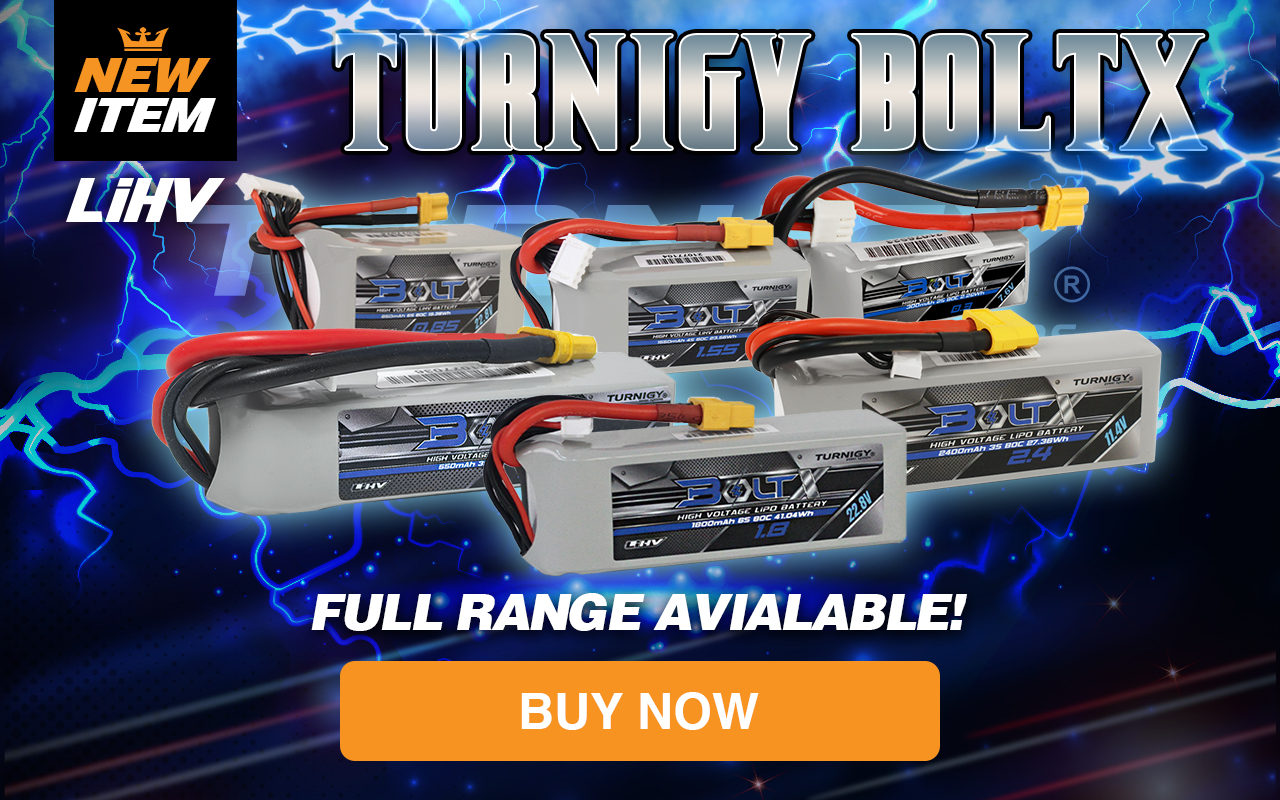
ESC Calibration Principle Analysis: From Throttle Signal to Precise Speed Control
The core task of an ESC is to transmit battery current to the motor at an appropriate frequency based on the received throttle signal (PWM or digital protocols such as DShot, Oneshot, etc.). The key to the calibration process lies in informing the ESC of the minimum value (lowest throttle) and maximum value (full throttle) emitted by the remote controller, enabling it to set an appropriate operating range.
Without calibration, the ESC may misinterpret intermediate or edge signal values, resulting in excessive current output at low speeds and insufficient current at high speeds. This deviation is particularly noticeable in high-voltage systems such as 6S LiPo battery configurations, making ESC calibration for 6S LiPo an indispensable step in high-performance models.
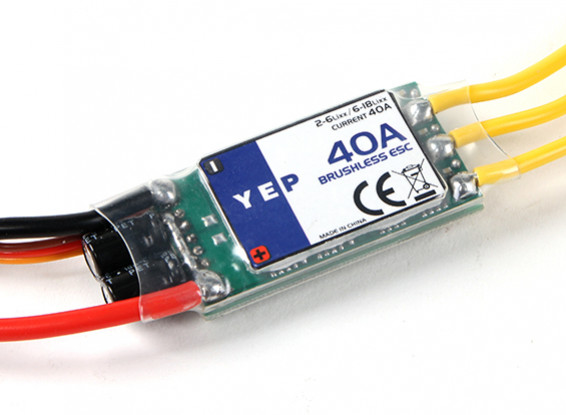
HobbyKing's Plush-32 series, YEP series, and Aerostar G2 series ESCs all support sensitive throttle detection and calibration, compatible with LiPo batteries ranging from 2S to 6S and even higher voltage ranges, providing professional players and FPV enthusiasts with robust compatibility.
Practical Guide: How to Perform the Standard Calibration Process for LiPo Batteries and ESCs?
For RC model enthusiasts, FPV pilots, and RC model users who use a LiPo battery and ESC system, performing a standardized calibration process not only improves the responsiveness of the ESC but also ensures the stable operation of the entire power system under high-voltage loads. This is especially critical when using a 6S LiPo battery, as the calibration of the ESC and throttle travel adjustment become particularly important.
1. Pre-calibration Preparation: Equipment and Environment
Before starting any LiPo battery and ESC calibration process, you need to prepare the following equipment:
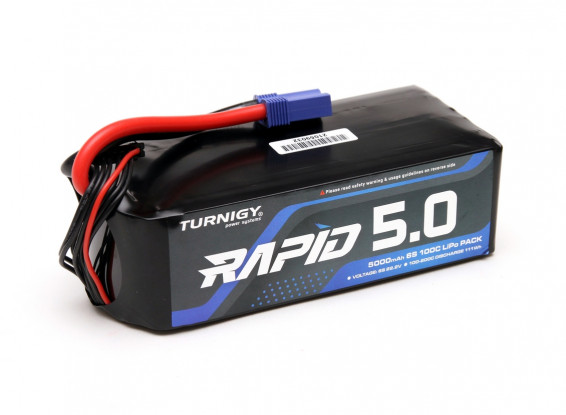
- A stable, fully charged 6S LiPo battery, such as the Turnigy Graphene Panther 6000mAh 6S 75C series from HobbyKing.
- A brushless ESC compatible with the battery voltage rating, such as the Turnigy Plush-32 100A 6S compatible version.
- A well-configured remote control system, such as the FrSky Taranis X9D, ensuring that the throttle channel is accurately zeroed.
- A safe testing environment away from flammable materials and crowded areas. Propeller guards or propellers should be removed if necessary.
2. ESC connection steps with LiPo battery (using HobbyKing ESC as an example)
When performing esc calibration for 6s lipo, we use HobbyKing's Aerostar RVS G2 series ESC as an example. The steps are as follows:
- Disconnect the power: Ensure that the ESC is not powered.
- Push to maximum throttle position: With the remote control turned on, push the throttle stick to the top (Full Throttle).
- Connect the battery: Connect the 6S LiPo battery to the ESC via an XT90 or EC5 connector. The ESC will emit a “calibration waiting tone.”
- Wait for the confirmation tone: After detecting the maximum throttle signal, the ESC will emit a “beep-beep” confirmation tone, indicating that the upper limit has been recorded.
- Push throttle to lowest position: Quickly push the throttle stick to the lowest position (Zero Throttle). The ESC will emit another set of beeps, indicating that the throttle range adjustment is complete.
- Calibration complete: The ESC enters normal startup mode, indicating that the entire LiPo battery and ESC calibration process has been successfully completed.
Note: HobbyKing's Plush-32 and Aerostar ESCs support different protocols, such as PWM, OneShot, and DShot. It is recommended to select the appropriate protocol based on the flight controller settings.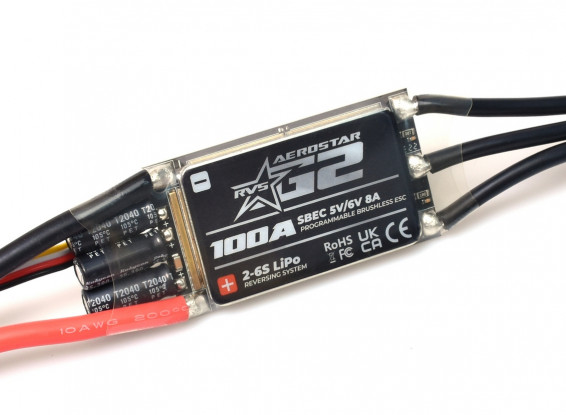
3. Special precautions for 6S LiPo batteries
When using 6S LiPo batteries, due to the voltage reaching 22.2V (up to 25.2V when fully charged), the requirements for the ESC are more stringent. The following points should be noted:
- Voltage Rating: Ensure the ESC is explicitly rated for 6S LiPo, such as the Turnigy Plush-32 100A (2~6S). Failure to do so may result in ESC damage.
- Thermal Management: After completing ESC calibration, perform a medium-speed test run to monitor for overheating. While HobbyKing ESCs feature built-in thermal protection, we recommend adding external heat sinks or fans for additional cooling.
- High-voltage calibration error correction: Some older remote control systems may experience slight deviations in throttle signal transmission at high voltages. This can be fine-tuned using an ESC programming card. HobbyKing provides the Turnigy Programming Card, which supports various parameter adjustments, including startup voltage, brake type, and throttle response curve.
4. Multi-mode support: Optimize calibration processes using a programming card
In LiPo battery and ESC calibration, if you wish to fine-tune the ESC's initial response and safety settings, we recommend using HobbyKing's Turnigy Plush-32 ESC Programming Card or Aerostar WiFi Module to achieve the following optimization features:
- Set minimum voltage protection (e.g., 3.2V/cell): Ensure LiPo batteries are not over-discharged.
- Set the start mode (Soft Start/Medium/Hard): Different models can select different start characteristics.
- Brake settings: Whether to enable reverse mode or motor braking, especially suitable for FPV racing and 3D fixed-wing models.
With these features, you can adjust the ESC behavior to better match the model's flight characteristics, enabling more precise throttle range adjustment operations, ensuring accurate ESC response to throttle inputs, and improving flight control feel.
5. Calibration testing and verification
After calibration, we recommend the following test steps:
- No-propeller test start: Gently push the throttle and observe whether the motor starts smoothly without vibration.
- Linear response test: Push the throttle from zero to full throttle and observe whether the throttle changes synchronously with the motor speed.
- Overheating protection test: Test the ESC temperature after continuous operation for 3 minutes; it is recommended not to exceed 60°C.
- Voltage Protection Test: Discharge the LiPo battery to 3.3V per cell and check if the ESC issues a low voltage warning or limits output.
This step not only verifies the success of the ESC calibration for 6S LiPo but also tests the ESC's ability to handle high voltages and high C-rate discharges. HobbyKing's ESC models, such as the Red Brick 200A V2, feature built-in multi-level protection circuits, providing more reliable power performance after calibration.
In-Depth Analysis: The Impact of Throttle Range Adjustment on Flight Control and Energy Consumption
1. Improving Flight Vehicle Response Accuracy
After adjusting the throttle range, the ESC can more quickly recognize low-speed commands, making it particularly suitable for racing drones and 3D fixed-wing models. After applying throttle range adjustment technology, the model responds more smoothly during takeoff, hovering, and speed changes.
2. Reducing ESC Heat Generation
Uncalibrated ESCs often output excessive current at low speeds, causing MOSFETs to overheat. By properly setting the throttle range, the workload is effectively reduced, extending the lifespan of the ESC.
3. Optimizing Battery Usage Efficiency
Especially in 6S systems, uncalibrated ESCs often result in energy waste. Through ESC calibration for 6S LiPo, the system's overall power consumption becomes more reasonable, extending LiPo battery runtime and reducing the risk of unexpected undervoltage.
Frequently Asked Questions: Experience Sharing from HobbyKing ESC Users
Among countless users of LiPo power systems, many have encountered confusion and technical obstacles during the process of calibrating LiPo batteries with ESCs, especially when using high-voltage 6S LiPo batteries, where issues such as ESC compatibility, calibration methods, and response optimization become more prominent. The following content compiles real-world usage experiences, typical fault reports, and solutions from the HobbyKing ESC user community, aiming to provide practical references for a wide range of users.
Question 1: Why is there still a delay when starting the ESC after calibrating the LiPo battery and ESC?
Experience shared by user Jayson from New Zealand:
“When using the Turnigy Plush-32 80A ESC with a 6S Graphene LiPo battery, even after completing ESC calibration, there was still a slight delay when accelerating from zero. Later, I used HobbyKing's programming card and found that the ‘Start Mode’ was set to ‘Soft’ by default. After changing it to ‘Medium,’ the startup response became immediate.”
Analysis and Recommendations:
This issue is typically not caused by calibration errors but rather by improper optimization of ESC operating parameters after throttle range adjustment. HobbyKing ESCs are designed to operate in a mild startup mode by default to protect the motor. However, for high-performance applications or racing FPV setups, it is recommended to use the programming card to set the ‘Start Mode’ to a higher setting to reduce startup lag.
Issue 2: ESC fails to recognize full throttle signal, calibration failed?
Experience shared by Hakim, a senior pilot from Malaysia:
“While performing ESC calibration for a 6S LiPo battery, I couldn’t enter calibration mode. Later, I discovered that the maximum output of the remote control’s CH3 channel was set to +85%. After adjusting it to +100%, the calibration passed on the first attempt.”
Analysis and Recommendations:
This is a typical remote control setting issue. During the LiPo battery and ESC calibration process, the ESC determines the throttle channel signal via the receiver. If the upper limit is less than 100%, the ESC cannot recognize the “full throttle” state, preventing entry into the calibration process. It is recommended to ensure that the output range for CH3 channel in the remote control settings is set to -100% to +100%, and disable throttle curve mixing (Throttle Expo).
Question 3: After ESC calibration, high-speed rotation is unstable with “jerking” phenomenon?
Feedback from German FPV racing pilot Mika:
"When flying on a long-distance track with a 6S 100C LiPo battery and an Aerostar RVS 60A ESC, I noticed the motor jerks at high throttle. It turned out that the ESC couldn't keep up with the input current at the default PWM frequency.After increasing the PWM frequency using the WiFi module, everything worked normally.“
Analysis and Recommendations:
This phenomenon is common when using high C-rate LiPo batteries to drive medium-power ESCs. After completing ESC calibration for 6S LiPo, if the PWM operating frequency or current limit parameters are not properly matched, ”current jerking" may occur during high-voltage rapid response. HobbyKing's Aerostar and Turnigy Plush-32 series ESCs support customizable frequencies.it is recommended to set the PWM frequency between 32–48 kHz in high-load models, and adjust the motor Kv value accordingly to improve system response linearity.
Question 4: ESC calibration is correct, but the battery continues to overheat, and flight time is reduced?
Case study from Shenzhen model enthusiast Awei:
"I am using the ZIPPY Compact 6S 5000mAh 60C battery paired with the Turnigy Plush-32 100A ESC. The throttle response is good, but the battery gets extremely hot within two minutes.After checking the log, I found that the ESC's braking function was enabled by default, causing abnormal battery load due to energy recovery during flight."
Analysis and Recommendations:
This is a typical reverse load issue caused by battery-ESC mismatch. In some ESC models (such as the Turnigy Plush-32 series), the braking or energy feedback function is enabled by default.If not disabled, the ESC continuously feeds the braking energy back to the battery during flight, causing the battery to remain under constant stress, overheat, and potentially swell. Therefore, when using 6S high-voltage LiPo batteries, it is essential to check whether the ESC has energy feedback enabled after calibration and disable the braking settings if necessary.
Question 5: ESC programming failed, settings cannot be saved?
Feedback from Canadian RC helicopter player Eliot:
“I wanted to set the ESC low voltage protection threshold to 3.2V/cell, but after connecting the HobbyKing programming card, I couldn't read the ESC parameters. Finally, I replaced the signal cable and found that the receiver extension cable was causing signal distortion.”
Analysis and Recommendations:
ESC programming failure is typically not caused by the ESC itself, but rather by communication connection errors or unstable voltage. Recommendations:
- Use the original HobbyKing programming card and a short cable for connection.
- Disconnect the battery before connecting the programming card to avoid high-voltage interference.
- If using a WiFi module for setup, ensure minimal signal interference in the surrounding area; it is recommended to turn off mobile phone Bluetooth and hotspots.
User Recommendation: Standardizing the LiPo and ESC calibration process should become a standard practice
Many experienced model enthusiasts emphasize that even when replacing the same model of ESC or LiPo battery, it is recommended to perform a LiPo battery and ESC calibration again. This is because, even if the hardware is identical, components from different batches may have signal deviations, leading to inconsistent throttle response or current output, which ultimately affects flight stability.
Especially when using 6S LiPo batteries, the following standard procedure should be strictly followed:
- Fully throttle forward before powering on → Plug in and listen for a beep → Throttle back → Listen for a confirmation beep;
- After completion, use a programming card or module to verify the initial voltage and current parameters;
- Conduct a 3-minute medium-load test, monitoring temperature, voltage, and motor vibration.
These practical experiences have become the consensus “standard operating template” within the HobbyKing user community.
User experience is a key reference for optimizing ESC calibration
Feedback from HobbyKing users in different countries and usage contexts shows that although the ESC calibration for 6S LiPo process is relatively fixed, actual faults and performance deviations are often caused by small details. Whether the throttle range adjustment is successfully completed, whether the ESC operating parameters are optimized, and whether the LiPo battery's actual discharge capacity is matched are all critical factors affecting system efficiency and safety.
By compiling this practical experience and FAQs, it becomes clear that HobbyKing not only provides high-quality ESCs and LiPo products but also leverages the collective experience of global users to build a reliable, transparent, and continuously evolving technical ecosystem. Calibration is not just a process; it is the threshold to enhancing flight quality—only through continuous learning and adjustment can you truly unlock the potential of your power system.
HobbyKing ESC Advantages: High Compatibility, High Efficiency, High Safety
As a leading manufacturer in the RC electronic speed controller industry, HobbyKing provides comprehensive solutions for LiPo battery systems, particularly in 6S application environments. From the versatile programming options of the Turnigy Plush-32, to the reverse functionality support of the Aerostar G2 RVS, and the high-voltage HV compatibility of the YEP series, its product design depth meets the diverse needs of users at all skill levels.
HobbyKing's ESCs not only support the PWM standard protocol but also the emerging DShot and Oneshot series, ensuring seamless integration with most current flight control systems. In high-voltage systems, we particularly recommend using ESCs with SBEC functionality, which provide stable power supply to both the ESC and the receiver/servo systems while powering the ESC itself.
LiPo battery systems are playing an increasingly important role in RC aircraft and ground vehicle models. To truly unlock their potential, precise ESC control and reasonable throttle range settings are essential. Through systematic LiPo battery and ESC calibration, especially in high-voltage configurations such as esc calibration for 6s lipo, users can significantly improve power output accuracy, battery efficiency, and overall system stability.
HobbyKing will continue to provide high-quality ESCs, batteries, and accessories to support users in efficiently completing throttle range adjustment, helping the RC world become more precise, efficient, and safe.
For more information about HobbyKing ESC programming cards, compatible products, and LiPo battery series, please visit the HobbyKing official website to explore more professional advice and technical resources.
Category
Tags
Category
Tags
Compra nuestros más vendidos
 11%
OFF

Avios (PNF) Grand Tundra 2 STOL Sports Plane EPO 1700mm (Green/Silver)
SKU 9499670637
$327.99$369.0018%
OFF
H-King Paramotor V2 con barra de luces LED 2400mm (PNF)
SKU 9310670504
$155.99$189.9913%
OFF
H-King (PNF) Flybeam 2 Night Flyer w/LED Light System 1092mm (EPO)
SKU 9310670554
$156.99$179.9915%
OFF
H-King (PNF) KitFox Sport Plane 1100mm/1250mm (EPO)
SKU 9898670063
$169.99$199.9915%
OFF
Durafly Curtiss P-40 Warhawk V2 "Aleutian Tiger" 1100mm (PNF)
SKU 9306670734
$203.99$239.9915%
OFF
Durafly Tundra V3 "Inspire" (PNF) Modelo Deportivo con Flaps Rojo/Plata EPO 1300mm (51")
SKU 9499670588
$211.99$249.0033%
OFF
HobbyKing Sports Hawk "ARF-Plus" Jet EDF de 105mm con Retráctiles, Servos y Luces LED
SKU 9306670706
$804.99$1,199.0015%
OFF
HobbyKing® ™ morsa Planeador w / Flaps EPO 1400mm (PNF)
SKU 9306000019
$83.99$98.9920%
OFF
Durafly (PNF) Rare Bear Reno Racer 680mm EPO (Gold/White)
SKU 1021670038
$135.99$169.9920%
OFF
Durafly (PNF) Rare Bear Reno Racer 680mm EPO (Green/White)
SKU 1021670037
$135.99$169.9920%
OFF
Durafly Tundra TPX (PNF) EPP Profile 3D/Aerobatic Plane 1050mm
SKU 1021670039
$143.99$179.99
Turnigy APEX 2200mAh 3S 11.1V 180C LiPo Battery with XT60 for 7 inch FPV Drone and Planes
SKU 9067110092
$19.99$25.99
Turnigy 3300mAh 3S (11.1V) 30C Shorty LiPo Battery Pack w/XT60
SKU 9067110010
$18.99$22.99