ブログ
記事を検索する
FPV Drone Laws & Registration USA (2025): TRUST, Remote ID, FAA Rules | HobbyKing
RC Black Friday Buying Guide 2026: What to Buy & How to Save
Battery
General News
LiPo Battery Safety and Optimization Guide
Battery
General News
LiPo Battery Safety and Optimization Guide
Introduction
Lithium Polymer (LiPo) batteries have revolutionized the RC world, offering high performance and energy density. However, to maximize their lifespan and ensure safety, it's essential to understand and follow key practices like using a lipo battery bag, maintaining proper lipo storage voltage, and observing safe lipo discharge voltage levels. This article, brought to you by HobbyKing, dives deep into how to manage LiPo batteries safely and effectively, whether you're an enthusiast or a beginner.
Quick Answer (Save This)
If you’re here because a pack puffed, got warm, or you’re confused by “storage voltage,” don’t overthink it. Most people only need three numbers: Storage is 3.7V–3.85V per cell (many chargers target ~3.80V/cell), a sensible cutoff is 3.3V–3.5V per cell, and 3.0V/cell is a “hard floor” you should avoid as a habit. If you’re not flying within the next 24–48 hours, bring the pack to storage voltage.
1. What is a LiPo Battery?
A LiPo (Lithium Polymer) battery is a rechargeable power source used in RC hobbies, drones, and various electronic devices. These batteries are favored for their high discharge rates, lightweight structure, and ability to deliver substantial power.
2. The Importance of a LiPo Battery Bag
A lipo battery bag is a fireproof storage pouch designed to reduce the risk of fire during charging, storage, or transport. HobbyKing strongly recommends using a high-quality lipo battery bag to prevent accidents.
- Benefits of Using a LiPo Battery Bag:
Fire containment: Limits damage in case of battery failure.
Portability: Makes battery transport safer and easier.
Compliance: Meets safety standards often required at RC tracks and events.
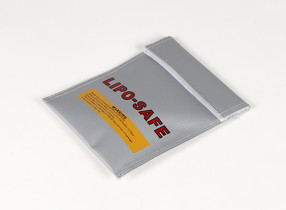
2.1 Transport & Travel Safety (Car, Field Bag, Airline)
Most LiPo incidents don’t happen in the air—they happen when a pack gets crushed, punctured, shorted, or overheated in a backpack or hot car. A few small habits reduce the odds dramatically.
- Before you move packs: If you’re not using them the same day, bring packs to storage voltage (Section 3). Protect exposed connectors so metal tools/screws can’t bridge them.
- In a car / field bag: Keep packs in a LiPo bag or safe box and away from loose tools. Don’t stack heavy gear on top of packs.
- Airline note (keep it simple): Rules vary, but many airlines want LiPos in carry-on with terminals protected against short circuits. Check your airline’s current limits before you fly.
3. Understanding LiPo Storage Voltage
One of the most overlooked aspects of LiPo battery care is proper storage. Incorrect voltage during storage can drastically reduce the battery’s lifespan.
What is the Ideal LiPo Storage Voltage?
The optimal lipo storage voltage is around 3.7V to 3.85V per cell. At this voltage range, the battery chemistry is more stable, which helps reduce swelling and slow long-term degradation.
When should you use storage voltage?
A practical rule: if you won’t use the pack within the next 24–48 hours, put it to storage voltage. If a pack is sitting near empty (for example, around ~3.3V/cell or lower at rest), bring it back up to storage voltage so normal self-discharge doesn’t push it into an unhealthy range.
How to use “Storage Mode” (simple steps)
Most balance chargers can automatically charge or discharge to storage voltage:
- Step 1: Select LiPo → STORAGE on your charger.
- Step 2: Confirm the correct cell count (2S/3S/4S/6S) and set a reasonable current.
- Step 3: Start the program; the charger will charge or discharge to the storage target and keep cells balanced.
- Step 4: After it finishes, do a quick check that cells land in the 3.7–3.85V/cell window.
- Storage Tips from HobbyKing:
- Avoid storing a LiPo battery at full charge (4.2V per cell) for days at a time.
- Avoid leaving packs near-empty for long periods; bring them back to storage voltage.
- Use a balance charger with a storage function.
- Store in a cool, dry place using a lipo battery bag.
4. LiPo Discharge Voltage Guidelines
Just as important as storage, monitoring your lipo discharge voltage during use ensures you don't damage the cells or reduce battery capacity.
- Safe LiPo Discharge Voltage Range:
- Minimum (hard floor) discharge voltage: 3.0V per cell.
- Recommended cutoff voltage: 3.3V to 3.5V per cell.
Under-load vs resting voltage (why numbers can look confusing)
Voltage sags under load. After you land and the pack rests, it often rebounds higher. That’s normal. For best pack life, focus on the recommended cutoff range and how the pack behaves under load (power feels soft, sag gets worse). If one cell repeatedly ends up noticeably lower than the others after a run (for example, roughly ~0.05–0.10V lower at rest), treat it as a warning sign and monitor the pack more closely.
Going below 3.0V can cause irreversible damage to the battery, making it unsafe or unusable. HobbyKing products often include built-in cutoff features to help users avoid over-discharging.
5. Charging LiPo Batteries Safely
Charging is the most critical phase in the LiPo lifecycle. Always use a high-quality balance charger like those available at HobbyKing.
- Charging Safety Guidelines:
- Always charge in a lipo battery bag.
- Never leave batteries unattended while charging.
- Set correct cell count and charge rate (1C is standard).

5.1 Temperature Safety (Charging, Storage, Winter Flying)
Temperature matters as much as voltage. A pack can be “at the right voltage” and still age fast if it lives hot, or become risky if it’s charged while warm.
- Don’t charge a warm pack: Let it cool close to room temperature after a run/flight before charging.
- Hot-car storage is brutal: Heat accelerates swelling and capacity loss, even at storage voltage.
- Winter flying: Voltage sag is worse in the cold, so you may hit LVC earlier. Warm packs gently (inside a pocket/insulated bag), not with aggressive heat.
- Common “oops”: Don’t seal a warm pack in a bag and then leave it somewhere hot—let it cool first.
6. Storage Best Practices for Long-Term Battery Health
Storing batteries the right way ensures long-term performance and safety.
- HobbyKing’s Storage Recommendations:
- Store batteries at storage voltage (about 3.7–3.85V per cell).
- Use lipo battery bags to isolate and protect each battery.
- Label batteries with last charge/use date and condition.
Long-term checklist (takes 2 minutes once a month)
Check per-cell voltage and balance on a few packs. Packs that drift low quickly, won’t balance, or show swelling deserve extra caution. For home storage, keep packs cool/dry and away from flammable clutter; a LiPo bag or safe box adds a sensible layer of protection.
7. Common LiPo Battery Mistakes to Avoid
Avoiding simple errors can greatly enhance the lifespan and safety of your LiPo batteries.
- Frequent Mistakes:
- Storing fully charged or drained batteries.
- Over-discharging during flight.
- Ignoring puffed or swollen cells.
- Mixing old and new batteries in series.
- Leaving packs loose in a bag with tools (connector shorts are more common than people think).
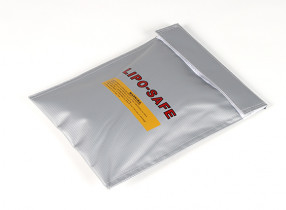
8. HobbyKing’s Trusted LiPo Battery Accessories
At HobbyKing, we not only offer high-quality LiPo batteries but also provide essential safety gear like:
- Certified lipo battery bags.
- Smart chargers with storage and safety modes.
- Voltage alarms and balance boards.
Conclusion
Properly using tools like a lipo battery bag, maintaining correct lipo storage voltage, and observing safe lipo discharge voltage can dramatically extend your battery’s lifespan and ensure your safety. HobbyKing is committed to educating and equipping RC hobbyists with the best tools and knowledge in the industry. Whether you're new to RC or an experienced flyer, these practices will keep your equipment running smoothly and safely.
Category
Tags
Category
Tags
ベストセラー商品はこちら
 11%
OFF

Avios (PNF) Grand Tundra 2 STOL Sports Plane EPO 1700mm (Green/Silver)
SKU 9499670637
$327.99$369.0018%
OFF
H-King パラモーター V2 w/LEDライトバー 2400mm (PNF)
SKU 9310670504
$155.99$189.9913%
OFF
H-King (PNF) Flybeam 2 Night Flyer w/LED Light System 1092mm (EPO)
SKU 9310670554
$156.99$179.9915%
OFF
H-King (PNF) KitFox Sport Plane 1100mm/1250mm (EPO)
SKU 9898670063
$169.99$199.9915%
OFF
Durafly Curtiss P-40 Warhawk V2 "Aleutian Tiger" 1100mm (PNF)
SKU 9306670734
$203.99$239.9915%
OFF
Durafly Tundra V3 "Inspire" (PNF) スポーツモデル フラップ付き 赤/銀 EPO 1300mm (51")
SKU 9499670588
$211.99$249.0033%
OFF
ホビーキング スポーツ・ホーク 「ARF-Plus」105mm EDF ジェット機(リトラクト装置、サーボ、LED ライト付き)
SKU 9306670706
$804.99$1,199.0015%
OFF
HobbyKing®™セイウチグライダーフラップEPO 1400ミリメートル(PNF)/ワット
SKU 9306000019
$83.99$98.9920%
OFF
Durafly (PNF) Rare Bear Reno Racer 680mm EPO (Gold/White)
SKU 1021670038
$135.99$169.9920%
OFF
Durafly (PNF) Rare Bear Reno Racer 680mm EPO (Green/White)
SKU 1021670037
$135.99$169.9920%
OFF
Durafly Tundra TPX (PNF) EPP Profile 3D/Aerobatic Plane 1050mm
SKU 1021670039
$143.99$179.99
Turnigy APEX 2200mAh 3S 11.1V 180C LiPo Battery with XT60 for 7 inch FPV Drone and Planes
SKU 9067110092
$19.99$25.99
Turnigy 3300mAh 3S (11.1V) 30C Shorty LiPo Battery Pack w/XT60
SKU 9067110010
$18.99$22.99