Блог
Поиск статьи
How to Take Off and Land an RC Flying Boat on Water | Avios Albatross HU-16
H-KING Turbo BushMaster V2 1830mm: 10 Things to Know Before You Buy
Planes
RC Flying Boat vs Floatplane: What's the Difference & Which Should You Choose?
Planes
RC Flying Boat vs Floatplane: What's the Difference & Which Should You Choose?
RC Seaplane Guide | Flying Boat vs Floatplane
Flying boats, floatplanes and seaplanes all operate from water, but they are not the same type of aircraft. Their structure, water handling and flying experience can be very different. This guide explains those differences and helps you choose the right RC seaplane for your flying style.

When choosing an RC aircraft for water flying, battery size, wingspan and radio setup matter. However, the first question should be simpler: do you want a flying boat or a floatplane?
Both belong to the wider seaplane category. Yet the way they sit on the water is fundamentally different. That difference affects their appearance, taxiing behavior, scale character and the experience you get before takeoff and after landing.
What Is an RC Seaplane?
An RC seaplane is an aircraft designed to operate from water. The term includes different designs, ranging from purpose-built flying boats to conventional airplanes fitted with floats.
The easiest way to understand the difference is to examine what supports the aircraft while it sits on the water.
What Is an RC Flying Boat?
A flying boat uses its main fuselage as the hull. The bottom of the fuselage is shaped to float, taxi and accelerate across the water before takeoff. Small stabilizing floats may also be installed near the wings to improve balance.
What Is an RC Floatplane?
A floatplane keeps a more conventional airplane fuselage and uses separate floats underneath it. These floats provide buoyancy and the planing surfaces used during water takeoff and landing.

The Avios Grand Tundra 2 is a useful example of an aircraft that can be configured for floatplane operation using compatible floats.
RC Flying Boat vs Floatplane: Key Differences
| Comparison | RC Flying Boat | RC Floatplane |
|---|---|---|
| Water contact | The fuselage hull sits directly on the water. | Separate floats support the aircraft above the water. |
| Aircraft design | Usually designed around water operation from the beginning. | Often based on a conventional airplane adapted for floats. |
| Scale appearance | Common on classic maritime, rescue and amphibious aircraft. | Common on bush planes, utility aircraft and trainers. |
| Water handling | Hull shape, hull step and stabilizing floats influence taxiing and takeoff. | Float geometry and position play a major role during water operation. |
| Conversion | The hull is normally an integral part of the aircraft. | Some models allow floats to be removed and landing gear installed. |
| Best for | Pilots who enjoy purpose-built water aircraft and scale flying. | Pilots who prefer a familiar airplane layout with water capability. |
Neither configuration is automatically better. A floatplane may feel more familiar to pilots transitioning from traditional land-based RC airplanes, while a flying boat makes the water itself a more important part of the flying experience.
Why Choose an RC Flying Boat?
1. Water Operation Is Built Into the Design
On a purpose-built flying boat, the hull is not an accessory. Its shape, step and water-contact surfaces are part of the aircraft. Taxiing, accelerating across the water and settling onto the hull after landing become important parts of every flight.
2. Flying Boats Offer Distinctive Scale Appearance
Aircraft such as the HU-16 Albatross stand apart from conventional sport planes. A broad hull, high-mounted wing and twin-engine layout create a distinctive appearance both on the water and in the air.
3. Water Handling Adds Another Flying Experience
A flying session includes more than takeoff, circuits and landing. Taxiing, controlling the aircraft in crosswinds, lining up for takeoff and returning to shore all add to the flying experience.
To learn more about water operation, read our RC Flying Boat Water Takeoff and Landing Guide .
Why Choose an RC Floatplane?
A floatplane can be an excellent choice if you want to experience water flying while keeping the proportions and handling characteristics of a conventional airplane.
Some RC aircraft are designed so their floats can be exchanged for conventional landing gear. This allows a compatible model to operate from both land and water. However, this feature depends on the specific aircraft and float system.
Choose a Flying Boat If You...
- Want a purpose-built water aircraft.
- Enjoy scale taxiing and water handling.
- Like classic maritime aircraft.
- Want a distinctive RC airplane.
- Prefer an integrated hull design.
Choose a Floatplane If You...
- Prefer a conventional airplane layout.
- Want water capability with separate floats.
- Like bush and utility aircraft.
- Want removable floats on a compatible model.
- Prefer familiar landplane characteristics.
Which Is Better for Beginners: Flying Boat or Floatplane?
If you are still learning the fundamentals of RC flight, water flying is usually not the best place to start.
Operating from water introduces additional variables before takeoff and after landing. Before moving to an RC seaplane, pilots should be comfortable with:
- Maintaining aircraft orientation throughout the flight.
- Making smooth and coordinated turns.
- Controlling approach speed and descent.
- Landing consistently.
- Recognizing a poor approach and performing a safe go-around.
Once those fundamentals are reliable, choosing between a flying boat and a floatplane becomes less about which is universally easier and more about which flying experience appeals to you.
Why the Avios Albatross HU-16 Is a True RC Flying Boat
The full-size HU-16 Albatross was designed around water operation. Its broad hull, high-mounted wing, twin-engine configuration and stabilizing floats make it a classic example of flying-boat design.
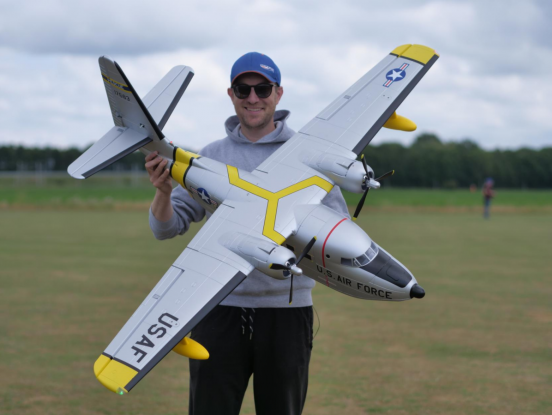
The Avios Albatross HU-16 brings that distinctive configuration to RC flying in a practical PNF format.
Avios Albatross HU-16 USAF Search and Rescue PNF 1620mm
The Avios Albatross HU-16 combines recognizable scale styling with a twin-motor flying-boat layout. Its integrated hull, water rudder and reversing ESC functionality make water operation a central part of the experience.
What Makes the Albatross Different From a Typical Floatplane?
| Feature | Why It Matters | Albatross HU-16 |
|---|---|---|
| Integrated hull | The fuselage handles direct water contact. | True flying-boat configuration without separate main floats. |
| 1620mm wingspan | Provides a strong scale presence. | Suitable for convincing scale-style flying. |
| Twin motors | Creates authentic twin-engine character. | Twin-motor configuration reflecting the original aircraft. |
| Water rudder | Supports directional control during low-speed taxiing. | Additional steering authority on the water. |
| Reversing ESCs | Can assist water maneuvering. | Useful functionality for water operation. |
| USAF SAR styling | Adds recognizable scale character. | Distinctive Search and Rescue-inspired appearance. |
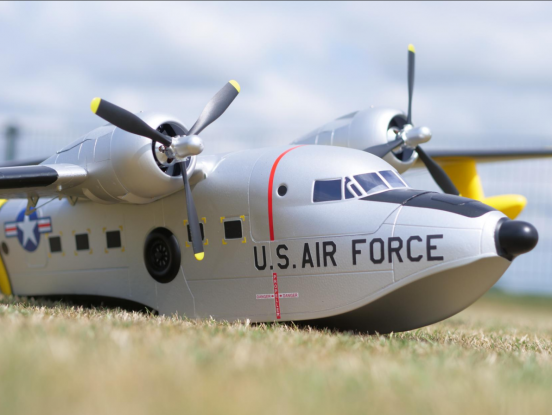
For a more detailed look at the aircraft, read our Avios Albatross HU-16 V3 Review .
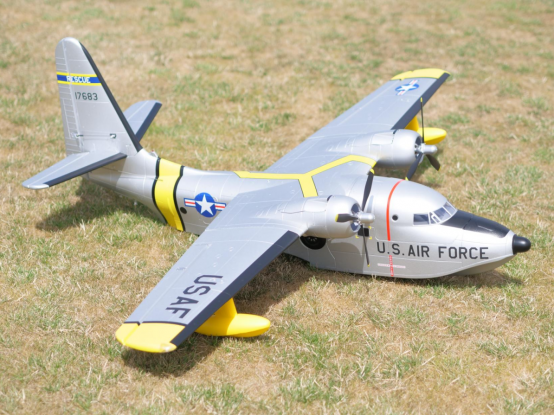
Can the Albatross Also Fly From Grass?
Depending on surface conditions, suitable smooth and short grass may provide another operating option. However, pilots should avoid long, wet or uneven grass because excessive drag can make takeoff difficult and may damage the bottom of the hull.
RC Flying Boat or Floatplane: Which Should You Choose?
The best choice depends on what type of flying experience you want. Consider your preferred aircraft style, flying location, experience level and whether you want a model designed specifically for water operation.
| Your Priority | Better Fit | Reason |
|---|---|---|
| True scale water operation | Flying boat | Water handling is part of the aircraft's original design. |
| Familiar airplane appearance | Floatplane | The fuselage resembles a conventional aircraft. |
| Classic maritime aircraft | Flying boat | Integrated hull designs naturally suit aircraft such as the HU-16. |
| Potential float removal | Floatplane | Some models support interchangeable landing gear. |
| Distinctive scale presence | Flying boat | The boat hull and twin-engine layout stand out visually. |
| Familiar transition from land flying | Often floatplane | Conventional airplane layouts may feel more familiar. |
Who Should Choose the Avios Albatross HU-16?
The Albatross is particularly appealing to RC pilots who already have basic airplane flying experience and want something more distinctive than another conventional sport aircraft.
- Pilots interested in purpose-built RC flying boats.
- Scale flying enthusiasts who enjoy classic maritime aircraft.
- Pilots with access to a suitable and safe water-flying location.
- Experienced RC pilots looking for a different flying challenge.
- Hobbyists interested in twin-motor aircraft and water handling.
What Do You Need to Fly the Avios Albatross HU-16?
Because the Albatross is supplied in PNF format, pilots need to complete the radio and flight battery setup before flying.
- Compatible RC transmitter and receiver: Select equipment with sufficient channels for the functions you intend to use.
- Suitable flight battery: Follow the recommended battery specification, connector requirements and CG guidance.
- LiPo battery charger: Use a charger suitable for the battery chemistry and cell count.
- Pre-flight setup: Check CG, control directions, motor rotation, flaps and failsafe.
- Water recovery plan: Prepare a safe recovery method before operating over water.
If you are preparing for your first water-flying session, our RC Flying Boat Water Takeoff and Landing Guide covers taxiing, takeoff, landing and common water-flying mistakes.
RC Flying Boat vs Floatplane: Frequently Asked Questions
Is a flying boat the same as a floatplane?
No. A flying boat uses its fuselage as the main hull, while a floatplane uses separate floats beneath the fuselage. Both are types of seaplanes.
Is a flying boat a type of seaplane?
Yes. Seaplane is the broader aircraft category. Flying boats and floatplanes are two different configurations designed for water operation.
Are RC flying boats harder to fly than floatplanes?
Not necessarily. Flight difficulty depends on the individual aircraft. Important differences often occur during taxiing, takeoff and landing, where hull or float design, wind and water conditions matter.
Which RC seaplane is best for beginners?
Pilots should first develop reliable basic RC airplane skills before attempting water flying. A stable, forgiving model with appropriate setup and a suitable flying site is more important than choosing a flying boat or floatplane alone.
Can an RC flying boat take off from grass?
Some models may operate from suitable smooth and short grass, but this depends on the aircraft design and surface conditions. Always follow the manufacturer's guidance.
What is the advantage of a twin-motor RC flying boat?
Twin motors provide authentic multi-engine scale character. Depending on the aircraft and radio configuration, they may also support additional water-handling capabilities.
Is the Avios Albatross HU-16 suitable for first-time RC pilots?
The Albatross is better suited to pilots who already have reliable basic RC airplane skills. Water flying introduces additional considerations such as taxiing, wind management and aircraft recovery.
Ready for Your Next Water-Flying Adventure?
If you want a purpose-built RC flying boat with strong scale presence, the Avios Albatross HU-16 delivers a distinctive experience compared with conventional float-equipped airplanes.
Shop Avios Albatross HU-16Category
Category
Покупайте наши лучшие продавцы

HobbyKing Hall Cherokee V2 1700mm Glider PNF w/ Retractable Propeller
SKU 9310670593
$179.99
Avios Albatross HU-16 USAF Search & Rescue RC Flying Boat PNF 1620mm
SKU 9310670605
$359.99
H-King (PNF) KitFox Sport Plane 1100mm/1250mm (EPO)
SKU 9898670063
$159.36$199.99
Avios Extra NG (PNF) Semi-Scale 3D Aerobatic Airplane EPO 1600mm
SKU 9447670080
$539.99$569.00
HobbyKing Sports Hawk "ARF-Plus" 105 мм EDF джет с убирающимися шасси, сервоприводами и светодиодными огнями
SKU 9306670706
$771.36$939.99
Turnigy 3300mAh 3S (11.1V) 30C Shorty LiPo Battery Pack w/XT60
SKU 9067110010
$18.17$22.99
Turnigy APEX 1500mAh 8S 29.6V 180C LiPo Battery with XT60 for 5 inch FPV Drone and Planes
SKU 9067110083
$36.99$43.99
Turnigy APEX 1800mAh 6S 22.2V 180C LiPo Battery with XT60 for 6 inch FPV Drone and Planes
SKU 9067110086
$29.99$39.99
Turnigy APEX 2200mAh 4S 14.8V 180C LiPo Battery with XT60 for FPV Drone and Planes
SKU 9067110094
$26.32$33.99
Turnigy APEX 2000mAh 4S 14.8V 180C LiPo Battery Dual Pack with XT60 for 7 inch FPV Drone and Planes
SKU 9067110089
$49.99$58.99
XFLY F-35 64mm EDF Jet PNP
SKU 1024670398
$269.99$299.99
Turnigy 8000mAh 4S 14.8V 40C LiPo Battery w/XT90-High Endurance LiPo for RC Cars Plane Boats & Drones
SKU 9067110102
$48.99$60.99
Turnigy High Capacity 16000mAh 6S 20C Lipo Battery w/XT90 - High Endurance LiPo for RC Cars Plane Boats & Drones
SKU 9067110054
$138.99$173.99
Turnigy 42000mAh 6S 22.2V 40C LiPo Battery w/XT90-High Endurance LiPo for RC Cars Plane Boats & Drones
SKU 9067110111
$409.99$455.99